
Month-End Expense Close for Small Law Firms
A practical, data-backed guide to controlling costs and automating expense workflows.
Effective expense management for law firms requires understanding key deadlines, such as the 10th of the following month for trust account reconciliations, and necessary documentation, including bank statements and cancelled checks. By following a clear and actionable guide, you can ensure compliance with regulations and avoid costly errors or disciplinary actions.
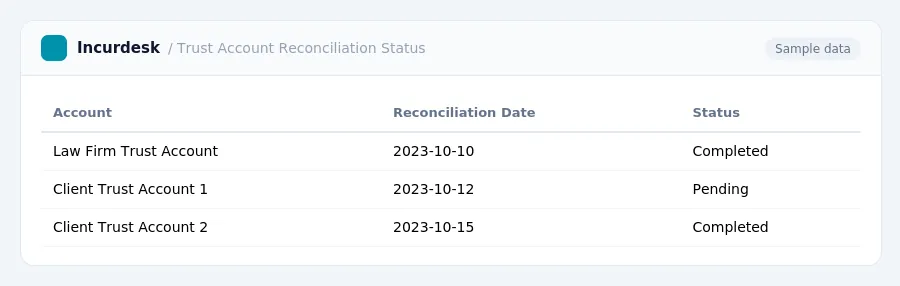
Key Deadlines and Compliance Requirements
Understand the federal and state-specific rules for financial reporting and compliance.
- Trust Account Compliance: Review state-specific trust account rules, including record-keeping requirements and minimum balance requirements.
- State-Specific Guidelines: Check your state's specific guidelines for travel expense reimbursements, as some states may have their own rates or rules.
- Annual Filing Requirements:
- Monthly Statement Requirements: Prepare monthly statements for trust accounts, showing all transactions, including deposits, withdrawals, and balances, by the 10th of the following month.
- Record-Keeping Requirements: Maintain accurate and detailed records of all trust account transactions, including receipts, disbursements, and account statements.
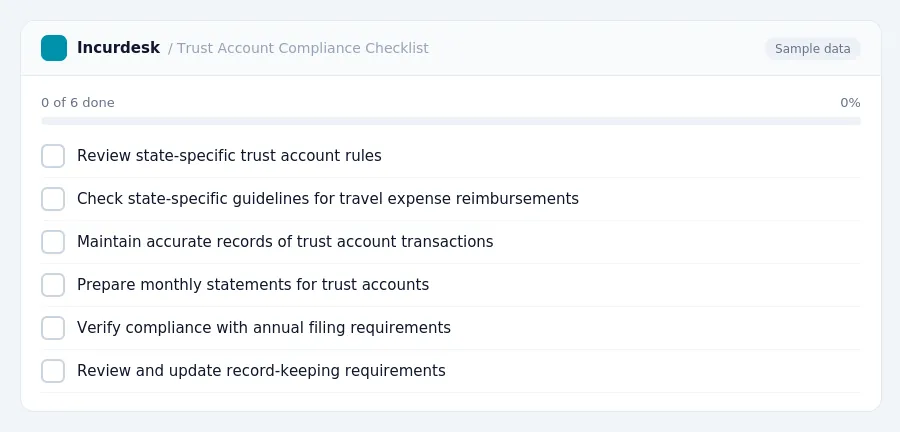
Gathering and Reviewing Financial Documents
Collect all necessary financial documents for the month-end close, including:
- Invoices and accounts receivable records
- Payables and accounts payable records
- Cash receipts and disbursements records
- Bank statements and cancelled checks
- Trust account records, including client ledgers and deposit slips
Review the documents to ensure they are complete and accurate. Check for any missing or duplicate entries, and verify that all transactions are properly classified and recorded.
Organize the documents in a logical and accessible manner, such as:
- Creating a master spreadsheet or table to track and reconcile transactions
- Using color-coding or labels to distinguish between different types of documents
- Storing electronic copies in a secure and easily accessible location
Ensure that all documents are properly signed, dated, and stored in accordance with your firm's policies and applicable laws and regulations.
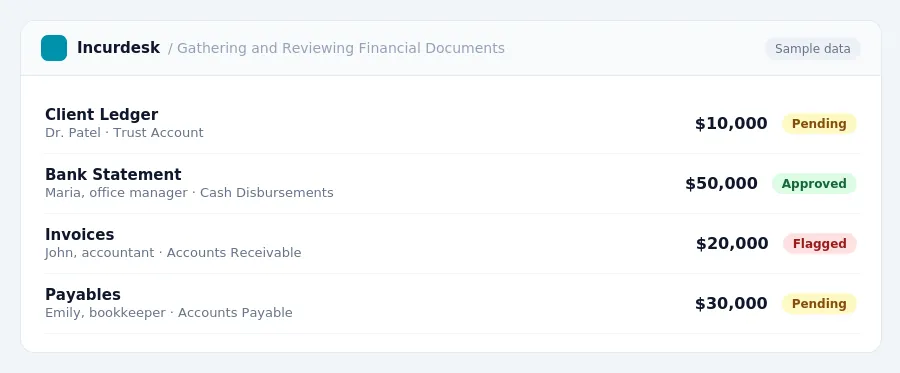
Reconciliation Procedures for Trust Accounts
- Perform a three-way trust account reconciliation at least monthly, ideally quarterly, using the following steps:
- Compare the bank statement balance to the ledger balance.
- Reconcile any discrepancies between the bank statement and ledger balances.
- Verify that each client's ledger balance matches the amount recorded in the firm's trust account records.
- Maintain client trust account records for at least five years after work has ended.
- Comply with state bar association rules for trust account management, record-keeping, and reconciliation procedures, which vary by state.
- Keep detailed records of all trust account transactions, including:
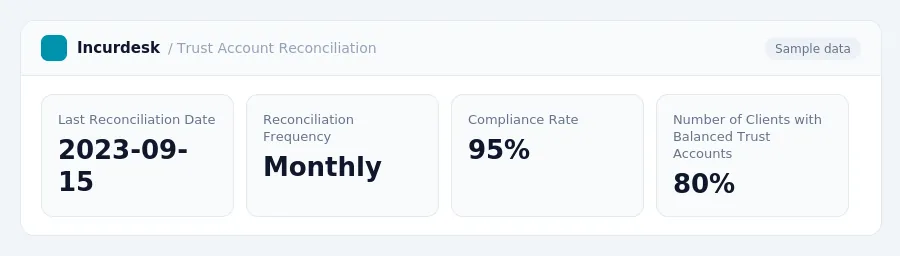
Accurate Accounting and Financial Reporting
When recording transactions, small law firms can use cash-basis accounting, which records transactions when money changes hands. However, C corporations and certain partnerships with average gross receipts above $32 million may be required to use accrual accounting.
- For cash-basis accounting:
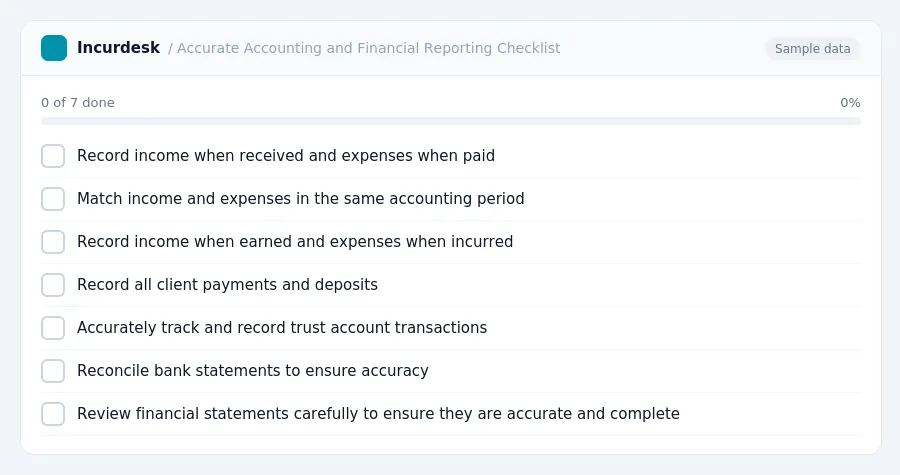
- Record income when received and expenses when paid.
- Match income and expenses in the same accounting period.
- For accrual accounting:
- Record income when earned and expenses when incurred.
Ensure all financial transactions are recorded accurately and in a timely manner. This includes:
- Recording all client payments and deposits.
- Accurately tracking and recording trust account transactions.
- Reconciling bank statements to ensure accuracy.
Review financial statements carefully to ensure they are accurate and complete. This includes:
- Checking for errors or discrepancies.
- Verifying that all financial transactions are recorded.
- Ensuring compliance with all relevant laws and regulations.
Maintaining Compliance and Avoiding Disciplinary Actions
Ensure that your financial close process is thorough and compliant with relevant laws and regulations. This includes:
- Reviewing and signing off on financial statements and reports, including trust account reconciliations, within the required timeframe.
- Verifying that all necessary documentation, such as bank statements and cancelled checks, is accurate and complete.
- Conducting regular audits to identify and correct any discrepancies or errors in financial records.
- Maintaining detailed records of trust account transactions, including deposits, withdrawals, and reconciliations.
- Ensuring that all financial records are properly stored and retained in accordance with regulatory requirements.
Take proactive steps to avoid costly errors or disciplinary actions, such as:
- Establishing clear policies and procedures for financial close and trust account management.
- Providing ongoing training and education for staff on financial close and trust account procedures.
- Conducting regular reviews and assessments to identify areas for improvement.
- Seeking professional advice and guidance from a qualified accountant or attorney if needed.
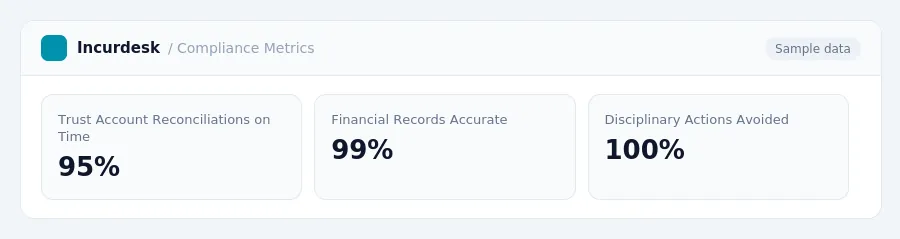
Keeping this simple: Incurdesk turns submitted expenses into clean expense reports. It is built for small law firm teams. Try it free.
Stop losing 4+ hours a week
30-day free trial · No credit card · Setup in 15 minutes