
Nonprofit Credit Card Policy Template
A practical, data-backed guide to controlling costs and automating expense workflows.
A well-crafted nonprofit credit card policy is essential for effective expense management for non-profit organizations. To ensure accountability and maintain donor trust, such a policy should clearly define card usage rules, including who can use cards, permissible purchases, spending limits, and required documentation. By establishing these guidelines, non-profits can prevent misuse of funds and ensure audit readiness, all while minimizing the risk of tax and tax-exempt status implications. For a complete overview, see our expense management guide.
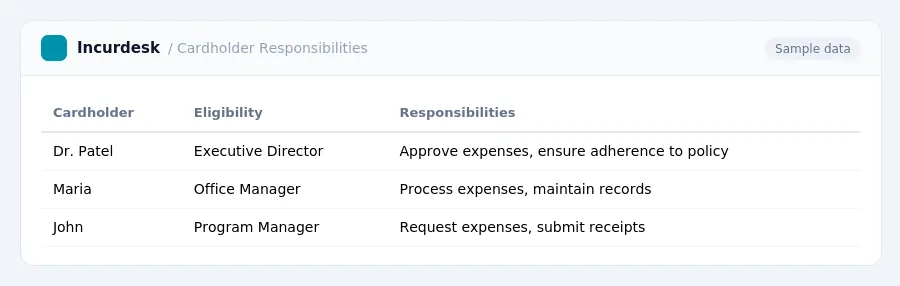
Eligibility and Cardholder Responsibilities
Only authorized personnel may use the organization's credit cards. To be eligible, individuals must be
- a senior staff member or board member
- an employee with a legitimate business need for a credit card
Before issuing a credit card, obtain a signed acknowledgement from the cardholder stating they understand the organization's credit card policy, including the prohibition on personal use. This acknowledgement must be retained as part of the cardholder's personnel file.
The credit card policy must be reviewed annually and updated as necessary to ensure compliance with applicable laws and regulations.
Spending Limits and Authorized Purchases
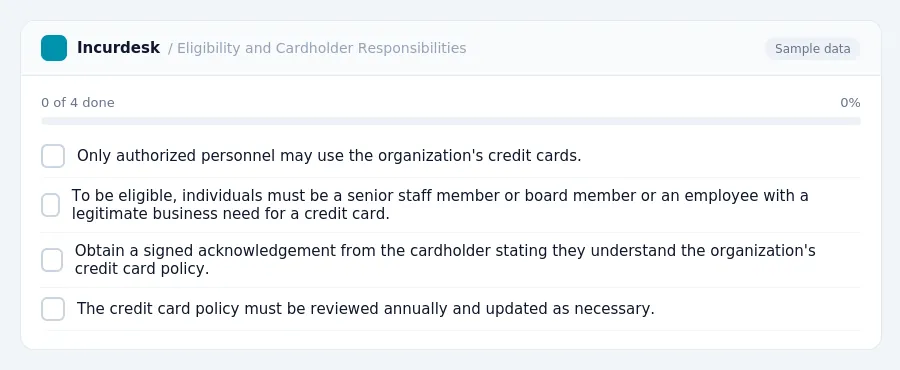
For [Company Name], the following spending limits will apply:
- Travel and meal expenses: $75 or more requires an itemized receipt.
- Other expenses: [dollar limit] per transaction, subject to [dollar limit] monthly limit.
Authorized purchases include:
- Purchases directly related to [Company Name]'s mission and operations.
- Donations made via credit card, subject to the following processing fees: 2-3% per transaction, often with a small fixed fee.
- Purchases from approved vendors and suppliers.
Prohibited purchases include:
- Purchases from unapproved vendors or suppliers.
Senior staff members require independent review of their spending activities.
Documentation Requirements and Reconciliation Procedures
Organizations must maintain accurate records of all credit card transactions, including receipts, invoices, and statements. The following procedures should be followed:
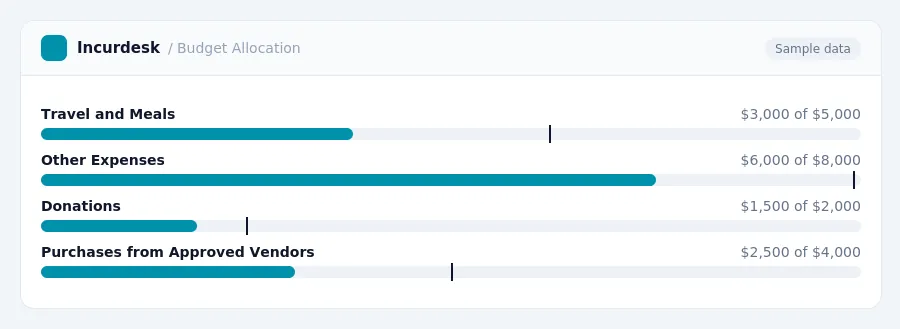
- Keep all receipts and invoices for at least seven years, as required by law.
- Record all rewards, cashback, or rebates earned on organizational credit cards in the organization's financial records.
- Reconcile credit card statements on a regular basis, ideally monthly, to ensure accuracy and detect any discrepancies.
Reconciliation procedures should include:
- Verifying all transactions against the organization's accounting records.
- Identifying and correcting any errors or discrepancies.
- Documenting all corrections and explanations for any discrepancies.
Organizations must also ensure that all credit card transactions are properly documented, including:
- Date and description of the transaction.
- Amount of the transaction.
- Purpose of the transaction.
Enforcement and Compliance
To maintain compliance with this policy, [Company Name] will:
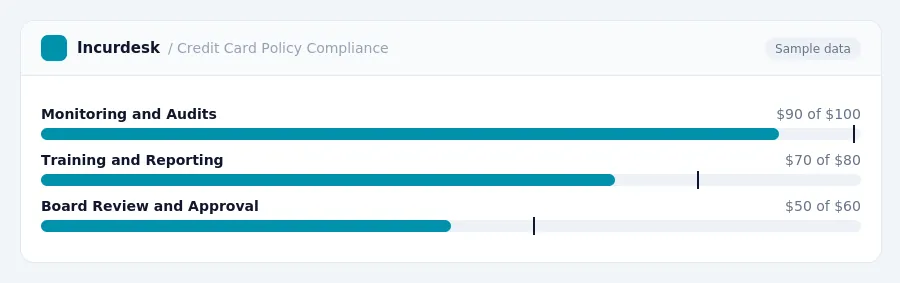
- Monitor all credit card statements and reconcile them with the general ledger on a monthly basis.
- Conduct regular audits to ensure compliance with this policy and detect any misuse of credit cards.
- Implement a system of checks and balances to prevent unauthorized use of credit cards.
- Provide training to all cardholders on the terms and conditions of this policy.
- Establish a process for reporting and investigating any suspected misuse of credit cards.
Cardholders are responsible for ensuring that all transactions are accurately recorded and reported, and that all required documentation is maintained.
Any discrepancies or suspected misuse of credit cards will be reported to the [Company Name] Board of Directors.
The [Company Name] Board of Directors will review and approve all credit card statements on a quarterly basis.
Record Retention and Reimbursement Arrangements
This section outlines the record retention and reimbursement arrangements for [Company Name].
Record Retention:
- Keep all credit card statements, receipts, and invoices for at least seven years.
- Store these documents in a secure and easily accessible location, such as a file cabinet or digital storage system.
- Ensure that all records are properly labeled and dated.
Reimbursement Arrangements:
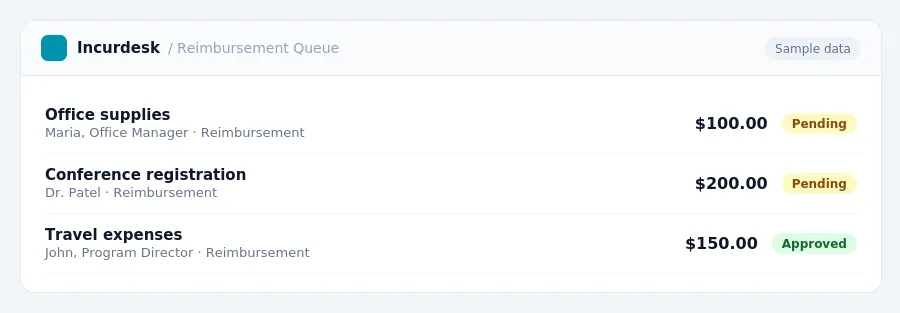
- Establish a reimbursement process that requires employees to submit receipts and documentation for reimbursement within a reasonable timeframe.
- Ensure that all reimbursement requests are approved and processed in a timely manner.
Credit Card Processing Fees:
Surcharging Legality:
- Check with your state to determine if credit card surcharging is prohibited or regulated.
- Comply with any applicable state regulations regarding credit card surcharging.
- Ensure that all required financial information, including credit card transactions, is accurately reported on the Form 990.
Keeping this simple: Incurdesk keeps receipts and approvals in one place, which makes a written policy easier to follow. It is built for small non profits teams. Try it free.
Stop losing 4+ hours a week
30-day free trial · No credit card · Setup in 15 minutes