
Nonprofit Expense and Reimbursement Policy Template
Copy, customise and auto-enforce with Incurdesk. Used by 500+ manager-led teams.
A well-defined expense and reimbursement policy is crucial for nonprofit organizations to ensure financial integrity and tax compliance. To establish a clear and compliant expense management for non-profit organizations
Mileage Reimbursement Policy and Rates
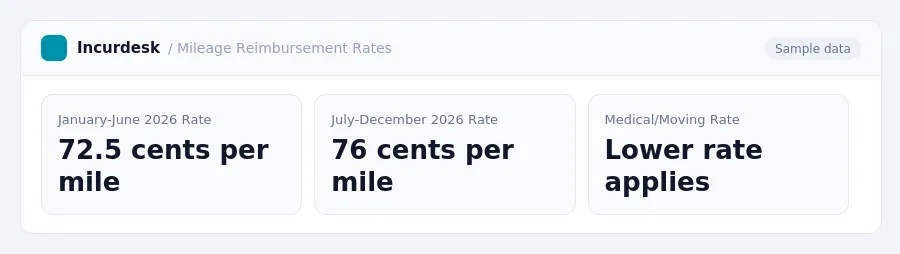
For the first six months of 2026, the rate is 72.5 cents per mile, and for the second six months, it increases to 76 cents per mile. These rates apply to business use, including travel to conferences, meetings, and other work-related activities.
For medical or moving expenses related to military personnel, the mileage reimbursement rate is lower.
To reimburse mileage expenses, employees must provide a detailed log of their mileage, including the date, starting and ending mileage, and purpose of the trip. This log should be submitted with the expense report, along with any supporting documentation, such as a map or GPS printout.
When calculating mileage reimbursement, use the applicable rate for the time period in which the mileage was incurred.
Per Diem Reimbursement Policy and Rates
The per diem reimbursement policy is used to compensate employees for expenses related to travel, meals, and lodging while on official business.
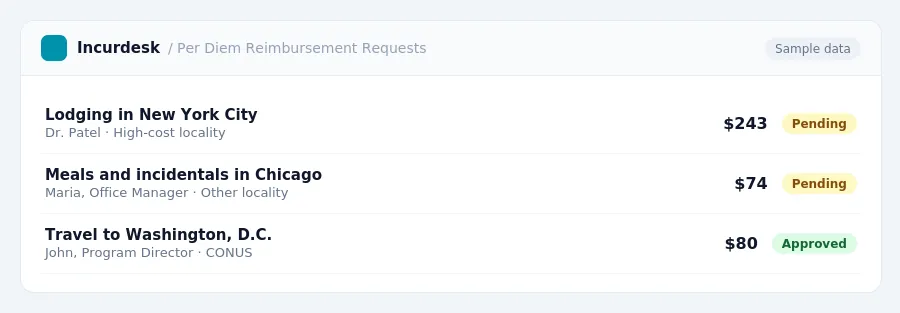
- High-cost localities: $329 per day, which includes $243 for lodging and $86 for meals and incidentals.
- Other localities: $230 per day, which includes $156 for lodging and $74 for meals and incidentals.
- CONUS: $80 per day.
- OCONUS: $86 per day.
Defining Reimbursable Expenses and Expense Categories
This includes establishing categories of expenses that are reimbursable under your policy.
- Business Connection: Ensure that all reimbursable expenses are related to a legitimate business purpose and align with your nonprofit's mission.
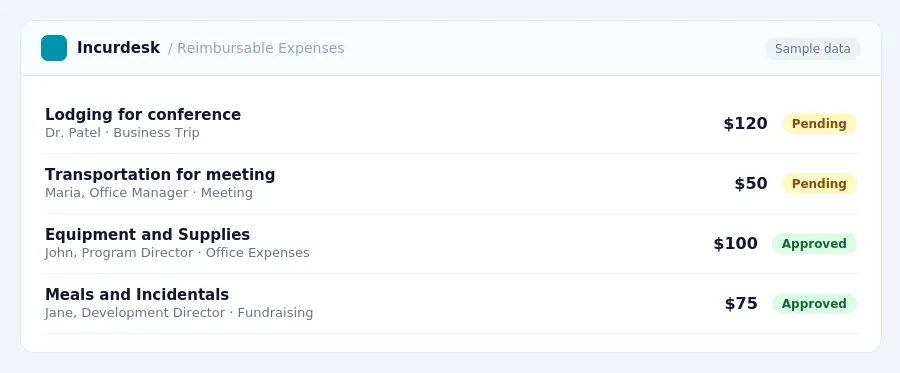
- Expense Categories: Define specific categories of expenses that are eligible for reimbursement, such as:
- Lodging
- Meals and Incidentals (M&IE)
- Transportation (including mileage)
- Travel
- Equipment and Supplies
- Other (specify)
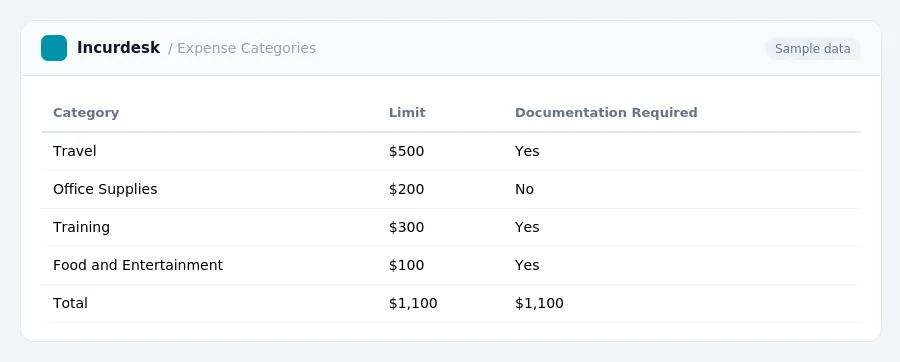
- Receipts are required for lodging expenses regardless of amount, and for other expenses of $75 or more.
- Moving Expense Reimbursement: The exclusion for qualified moving expense reimbursements is permanently eliminated for most employees, except for members of the U.S. Armed Forces on active duty and certain intelligence community employees.
Establishing Documentation Requirements and Timelines
To maintain financial integrity and ensure compliance, it's essential to establish clear documentation requirements and timelines for expense reimbursement. Here are some best practices:
- Require staff to maintain accurate and detailed records of expenses, including receipts, invoices, and bank statements.
- Designate a specific person or department to review and process expense reports.
- Specify the format for expense reports, such as a digital submission or paper form.
For example, you may want to keep records for at least three years from the date of the expense.
When it comes to receipts, make sure to require staff to keep receipts for all expenses, including small purchases. This will help ensure that expenses are properly documented and can be easily verified.
Auto-enforce this policy with Incurdesk
Every rule in this template enforced automatically. 30-day free trial.