
Petty Cash Rules for Medical Offices
A practical, data-backed guide to controlling costs and automating expense workflows.
Managing petty cash in a small healthcare business requires clear guidelines to ensure compliance and prevent misuse. A well-structured system will help you stay within budget, meet regulatory requirements, and optimize healthcare expense management for under $10/user (2026). To achieve this, it's essential to establish rules for appropriate uses, set limits, and maintain accurate records to prevent overspending and ensure accountability.
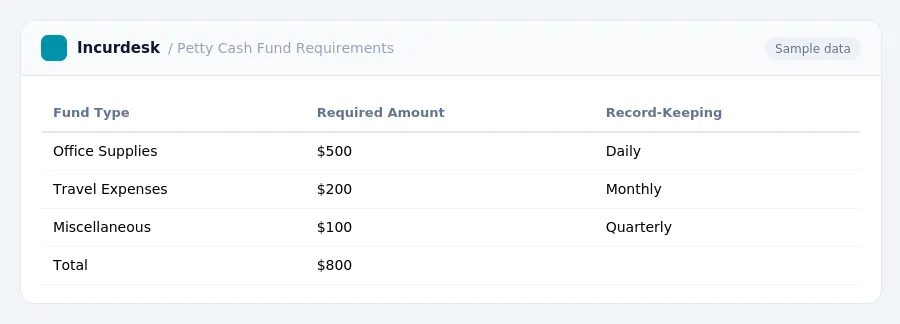
Understanding Petty Cash Fund Requirements
- Petty Cash Fund Requirements
Petty cash is intended for small, occasional expenses such as postage due, emergency office supplies, or a small celebratory item for staff.
Petty cash should not be used for making loans to staff or for cashing personal checks.
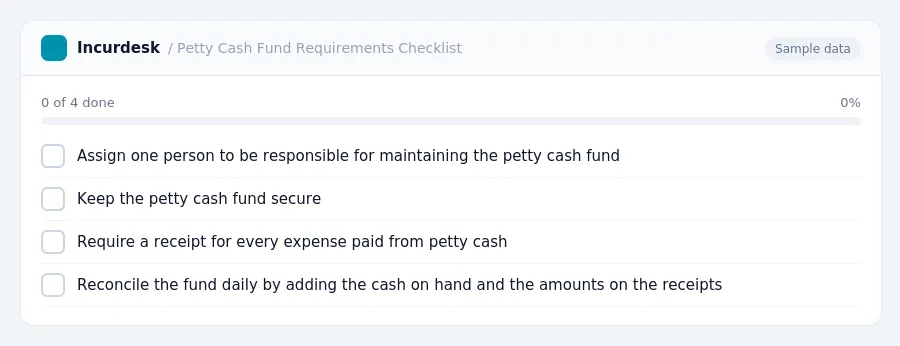
Assign one person to be responsible for maintaining the petty cash fund and keeping it secure.
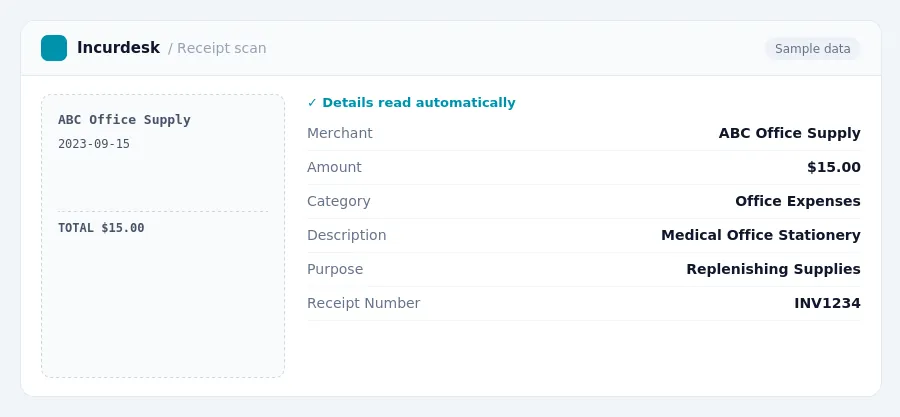
A receipt is required for every expense paid from petty cash. The receipt should detail what was purchased, when, where, and why.
The custodian should reconcile the fund daily by adding the cash on hand and the amounts on the receipts; this total should equal the original fund balance.
Establishing Petty Cash Fund Limits and Replenishment
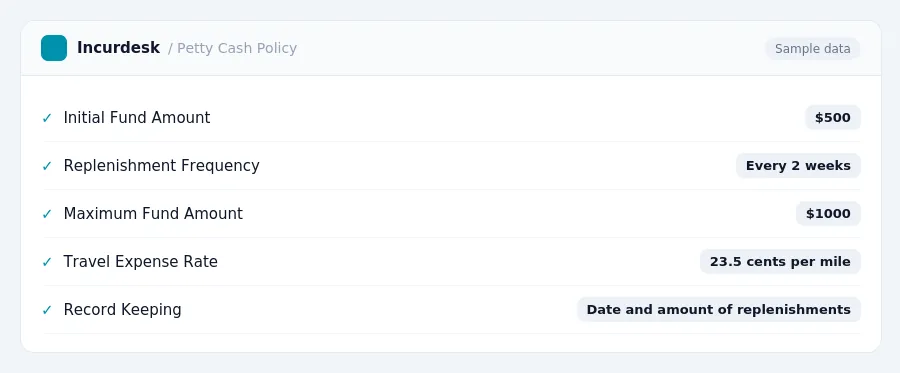
When setting up your petty cash fund, determine the initial amount and establish limits for replenishment. Typically, practices replenish petty cash by writing checks twice a month to pay bills. If replenishment is needed more often, the fund amount may need adjustment.
- Establish a fund amount: Set an initial amount for your petty cash fund, taking into account typical expenses such as office supplies and small purchases.
- Replenishment frequency: Decide on the frequency of replenishment, such as twice a month, and adjust the fund amount as needed to accommodate more frequent replenishment.
- Maximum fund amount: Set a maximum fund amount to prevent excessive accumulation of cash and ensure compliance.
For travel expenses, use the current mileage rate: 23.5 cents per mile for medical purposes (July 1 - December 31, 2026).
Keep records of fund replenishments, including:
- Date and amount of replenishment
- Check numbers and amounts paid
- Reason for replenishment (e.g., bills paid)
Store these records securely, along with other petty cash records, to ensure easy access for auditing and reconciliation.
Appropriate Uses for Petty Cash Funds
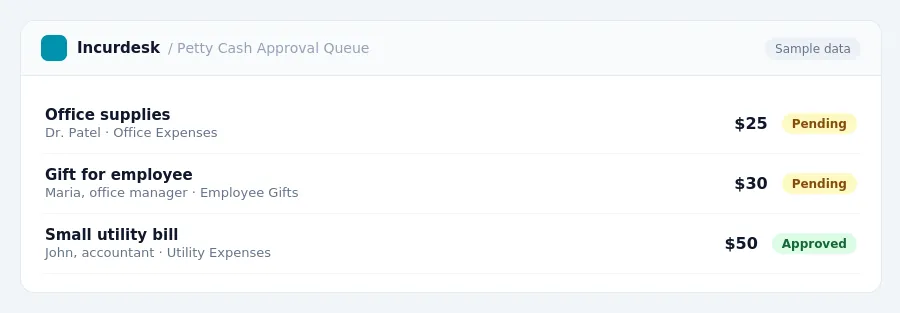
- Small, miscellaneous expenses such as office supplies, stamps, and small equipment repairs
- Gifts for patients, employees, or vendors, up to a certain limit (e.g., $20-$50 per gift)
- Small travel expenses, such as meals or parking, when traveling on official business
- Miscellaneous business expenses not covered by other accounts, such as small utility bills or subscription fees
When determining the types of expenses that can be paid from petty cash, consider the following limits:
- General recommendations for small funds are $50-$100
- Some institutions may have specific policies, so check your office's policy manual
- As a general guideline, do not exceed $500 for petty cash funds
Keep in mind that these limits may vary depending on your office's specific needs and policies. Always check with your supervisor or accounting department to ensure you are following the correct procedures.
Record-Keeping and Reconciliation for Petty Cash
- Establish a petty cash log to track each transaction, including date, description, amount, and purpose.
- Use a petty cash register or a secure container to store the cash and keep it locked when not in use.
- Keep receipts for all petty cash transactions, including purchases, reimbursements, and refunds.
- Reconcile the petty cash fund regularly, ideally at the end of each month, by:
- Counting the cash on hand and comparing it to the balance on the log.
- Verifying that all receipts are accounted for and match the transactions on the log.
- Adjusting the log and replenishing the fund as needed.
- For example, a $10 purchase would be recorded as:
- Review and update the petty cash log and reconciliation process regularly to ensure accuracy and compliance.
Potential Pitfalls and Best Practices for Petty Cash Management
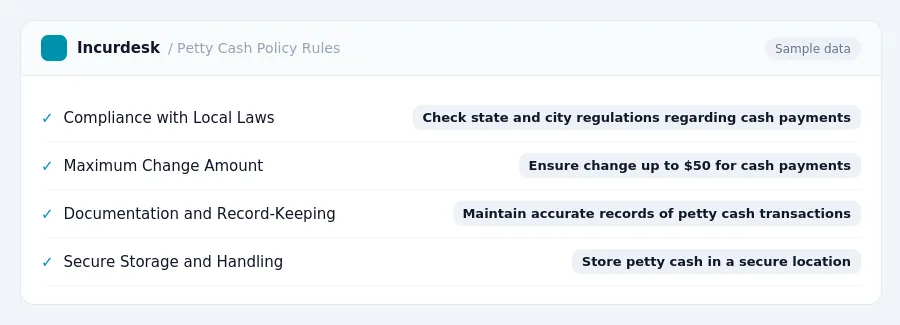
- Compliance with Local Laws: Check your state and city's regulations regarding cash payments. Some areas, like New Jersey and Massachusetts, prohibit businesses from refusing cash payments. Verify local laws and adjust your petty cash policies accordingly.
- Maximum Change Amount: Connecticut law requires healthcare providers receiving state funding to provide change up to $50 for cash payments. Ensure your petty cash fund is replenished and managed to meet this requirement.
- Documentation and Record-Keeping: Maintain accurate records of petty cash transactions, including receipts, invoices, and reconciliation statements. This will help you track expenses and detect potential discrepancies.
- Secure Storage and Handling: Store petty cash in a secure location, such as a locked cabinet or safe, to prevent theft or loss. Establish clear procedures for handling cash, including counting and reconciling the fund regularly.
- Regular Reconciliation and Replenishment: Schedule regular petty cash reconciliations to ensure the fund is accurate and up-to-date. Replenish the fund as needed to maintain an adequate balance.
Keeping this simple: Incurdesk keeps receipts and approvals in one place, which makes a written policy easier to follow. It is built for small healthcare teams. Try it free.
Stop losing 4+ hours a week
30-day free trial · No credit card · Setup in 15 minutes