
Receipt Documentation Checklist for Nonprofit Audits
A practical, data-backed guide to controlling costs and automating expense workflows.
Proper documentation is crucial for expense management for non-profit organizations, including record retention, donor acknowledgements, and adherence to federal and state audit thresholds. By following a thorough receipt documentation checklist, nonprofits can demonstrate accountability to donors, funders, and regulatory bodies, and maintain their tax-exempt status. For a complete overview, see our expense management guide.
Record Retention Requirements
Nonprofits must maintain accurate and detailed records to ensure compliance during audits. Record retention is a critical aspect of this process.
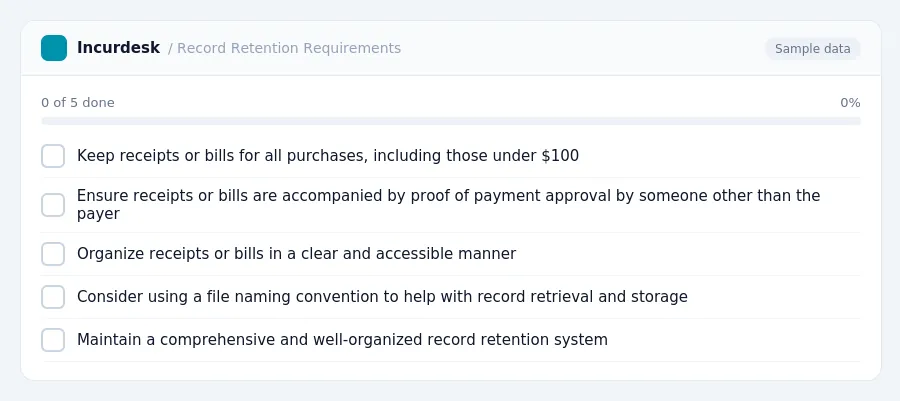
- Keep receipts or bills for all purchases, including those under $100, as proof of payment.
- Ensure receipts or bills are accompanied by proof of payment approval by someone other than the payer.
- Organize receipts or bills in a clear and accessible manner, such as by date, vendor, or type of expense.
- Consider using a file naming convention to help with record retrieval and storage.
Keep in mind that auditors may request specific records, so it's essential to maintain a comprehensive and well-organized record retention system.
Documentation for Donor Acknowledgement
- Include the following information in the acknowledgment letter:
- The donor's name and address
- The date and amount of the donation
- A statement indicating no goods or services were provided in exchange for the donation (if applicable)
- The organization's tax ID number
- Use fund accounting principles to track restricted versus unrestricted funds separately.
- Document donor intent for every restricted contribution, including:
- The donor's name and contact information
- The amount and purpose of the restricted contribution
- The organization's plan for using the restricted funds
- Keep accurate and detailed records of all donor acknowledgements, including the acknowledgment letter and supporting documentation.
Internal Controls and Financial Transactions
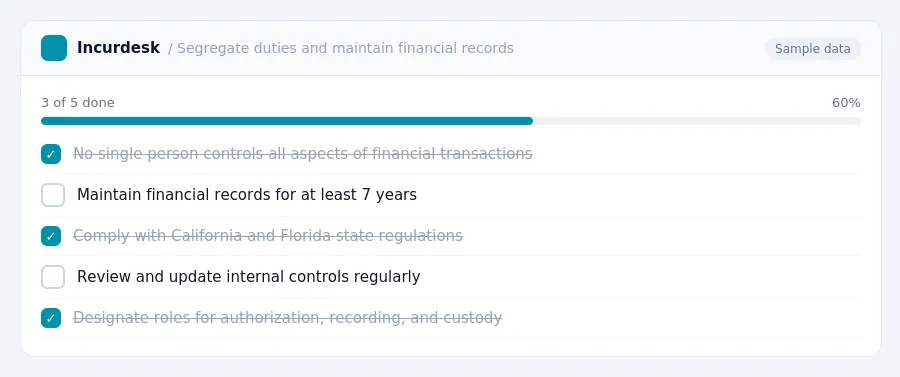
- Segregate duties to prevent fraud and protect compliance: no single person should control all aspects of any financial transaction (authorization, recording, custody).
- For California nonprofits, audited financial statements are required if gross revenue reaches $2 million or more in any fiscal year.
- For Florida nonprofits, a financial review by an independent CPA is required for contributions between $500,000 and $1 million.
- Maintain financial records for at least seven years from the related tax return's filing date.
Permanent Record Keeping and Grant Management
- Review grant agreements carefully to understand the terms and conditions of the funding.
- Track expenditures against grant conditions to ensure compliance and avoid repayment or loss of future funding.
- Keep detailed records of all grant-related documents, including:
- Grant agreements and amendments
- Expenditure reports and invoices
- Reconciliation statements and audit reports
- Organize records by grant, with clear and consistent naming conventions and storage.
- Retain grant records for a minimum of 7 years, as required by the Internal Revenue Code (IRC).
- Ensure that all grant-related financial transactions are properly authorized, documented, and accounted for.
- Conduct regular reviews of grant records to ensure accuracy, completeness, and compliance with grant conditions.
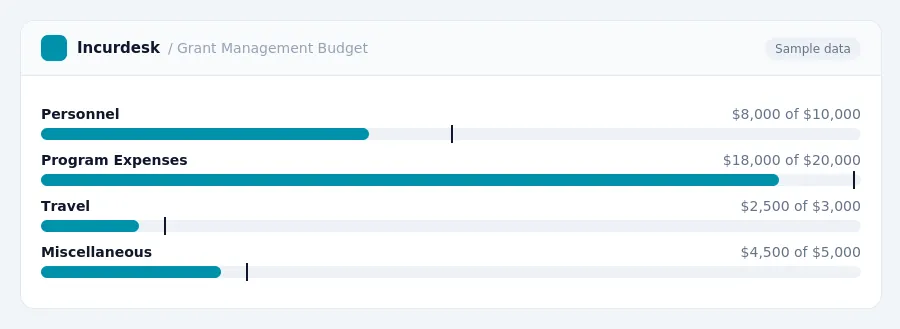
Keeping this simple: Incurdesk lets your team snap a photo of a receipt and fills in the details for you. It is built for small non profits teams. Try it free.
Stop losing 4+ hours a week
30-day free trial · No credit card · Setup in 15 minutes