
Recovering Client Costs Before Invoicing
A practical, data-backed guide to controlling costs and automating expense workflows.
Small law firms with 5-50 employees can maintain healthy cash flow and avoid financial risks by recovering client costs before invoicing. To do so, it's essential to understand what costs are recoverable, such as expenses related to travel, photocopying, and postage, which can be tracked and billed to clients under expense management for law firms. By doing so, firms can minimize their out-of-pocket expenses and ensure timely reimbursement.
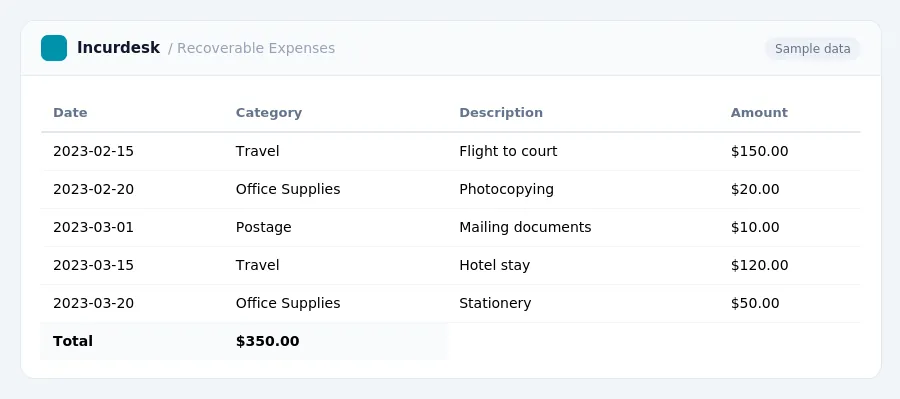
Understanding Recoverable Client Costs
- Soft costs, such as overhead expenses or work typically performed in-house, may be deductible as normal operating expenses if they would reasonably be incurred even if not charged to a particular client.
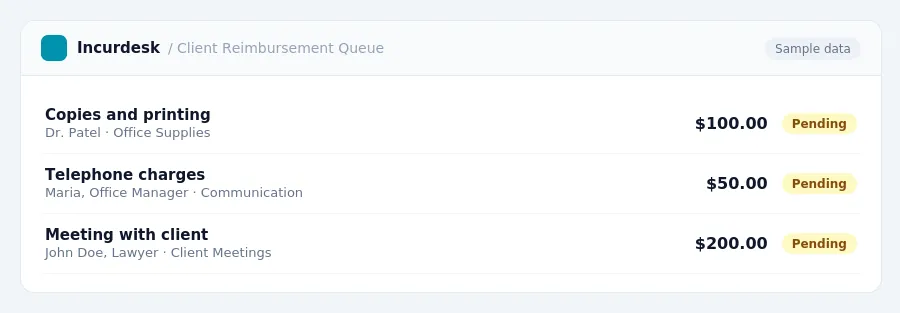
- Lawyers may seek reimbursement for in-house services, like copying, or expenses, like telephone charges, by charging a reasonable amount agreed upon in advance by the client, or an amount that reasonably reflects the cost incurred.
- Contingent fee agreements must state whether expenses are deducted before or after the contingent fee is calculated and clearly notify the client of expenses for which they will be liable, regardless of the outcome.
- For a business, corporation, or partnership to recover costs from the IRS under Qualified Offer rules, its net worth cannot exceed $7 million, and it cannot have more than 500 employees.
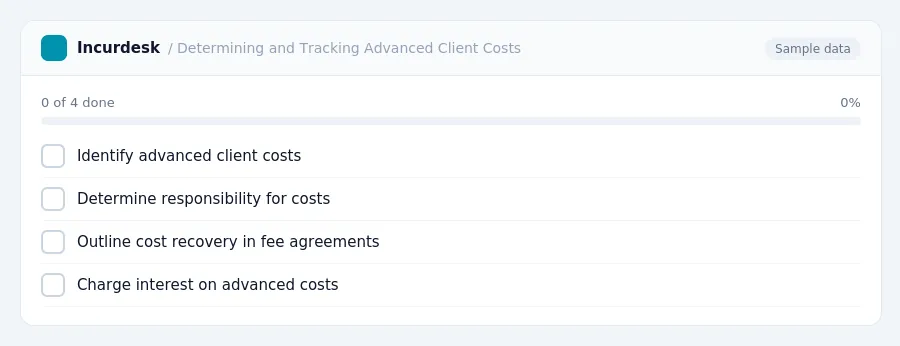
Determining and Tracking Advanced Client Costs
- Identify the type of advanced client costs your law firm fronts for clients, such as:
- Court filing fees
- Expert witness fees
- Deposition costs
- Process server fees
- Understand that costs advanced with an expectation of repayment are treated as loans (receivables) by the IRS, not deductible business expenses when paid. They become deductible only when they become uncollectible as a business bad debt under IRC 166.
- Ensure that advanced client costs are paid from a client's trust account only if the client has deposited funds for that purpose and state rules permit it. Otherwise, costs the firm fronts are paid from operating funds and billed back to the client.
- Clearly outline in fee agreements how costs are handled, who is responsible for them, how and when they are billed or recovered, and what happens to advanced costs if the matter ends without a recovery.
- Consider charging interest on advanced client costs in some jurisdictions, especially if reimbursement is delayed, but this depends on the client agreement and local regulations.
Billing and Recovering Advanced Client Costs
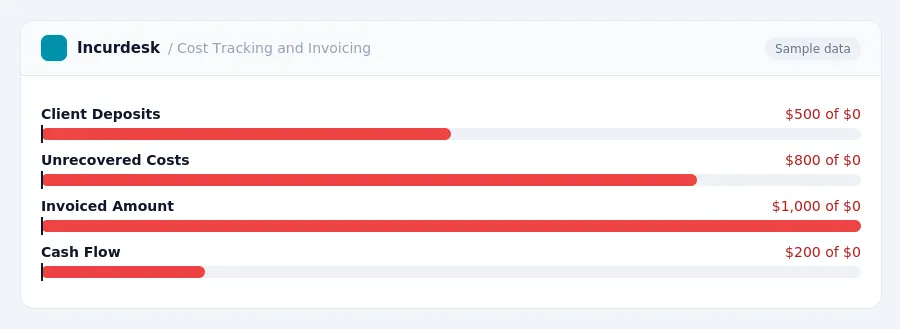
Unrecovered costs are real losses and should be recognized as such. To manage this, establish a clear policy for billing and recovering advanced client costs.
- Develop a prompt billing policy: Bill clients promptly, ideally within 14 days of advancing funds, to minimize the risk of unrecovered costs.
- Regularly review collectible balances: Regularly review and decide on collectible balances to minimize the risk of unrecovered costs.
- Keep accurate records: Keep accurate records of advanced costs, including dates, amounts, and clients.
- Consider the tax implications: Consider the tax implications of advancing funds and ensure compliance with relevant tax laws.
By following these steps, you can effectively bill and recover advanced client costs, minimizing the risk of unrecovered costs and maintaining healthy cash flow.
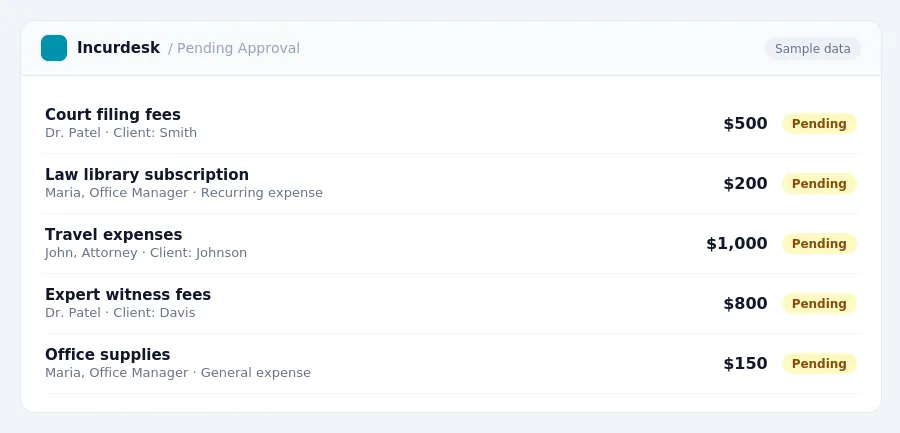
Managing Unrecovered Costs and Cash Flow
Unrecovered costs can significantly impact a law firm's cash flow. To minimize this risk, it's essential to track and record costs as they occur.
- Record every cost against its matter immediately, with thorough documentation.
- Automate tracking with practice management and accounting tools, but prioritize capturing each cost as it happens.
- Untracked costs are unrecovered costs.
Collecting funds from clients upfront to cover anticipated costs can shift the financing back to the client, protecting the firm's cash flow.
- Hold these deposits in a client trust account until costs are incurred.
Regularly invoicing clients for advanced costs is crucial for timely reimbursement and maintaining cash flow.
- Invoice clients monthly or at key case milestones.
- Prevent large, unexpected bills by maintaining a regular invoicing schedule.
Additional Considerations for Law Firms
When recovering client costs before invoicing, law firms must also consider other important factors to ensure a smooth process. Here are some key considerations:
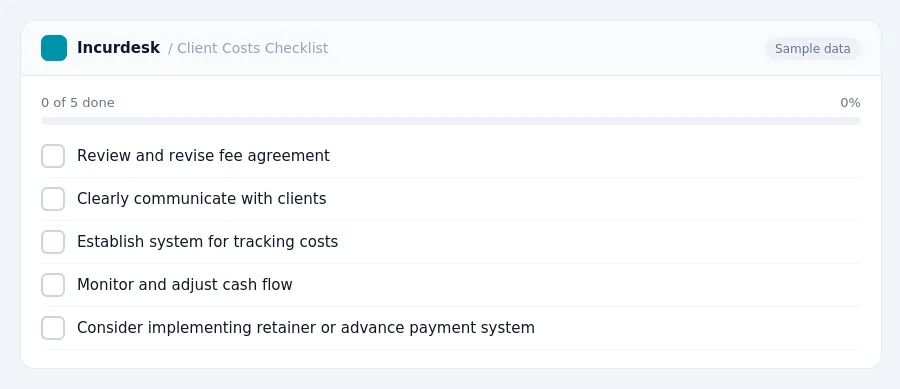
- Review and revise your fee agreement regularly to ensure it accurately reflects your firm's policies and procedures for recovering client costs.
- Clearly communicate with clients about the costs they will be responsible for and the timing of these costs, to avoid misunderstandings and disputes.
- Establish a system for tracking and managing client costs, including the costs of third-party vendors and services, to ensure accurate and timely billing.
- Monitor and adjust your cash flow regularly to ensure that you have sufficient funds to cover client costs and other expenses.
- Consider implementing a retainer or advance payment system to help manage cash flow and ensure that clients have sufficient funds to cover costs.
- Stay up-to-date with changing laws and regulations related to client costs and billing, to ensure compliance and avoid potential risks.
- Provide regular billing and financial updates to clients, to maintain transparency and trust.
Keeping this simple: Incurdesk turns submitted expenses into clean expense reports. It is built for small law firm teams. Try it free.
Stop losing 4+ hours a week
30-day free trial · No credit card · Setup in 15 minutes