
Reimbursing Physician Licensing, Board and DEA Renewal Fees
A practical, data-backed guide to controlling costs and automating expense workflows.
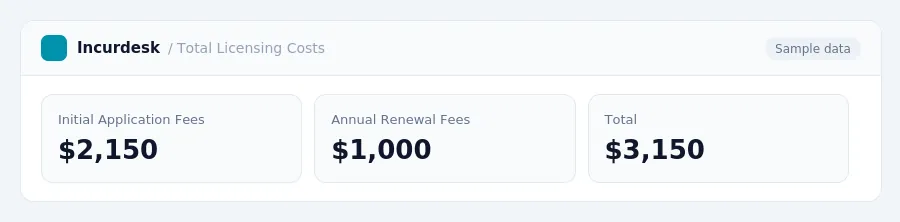
Physician licensing, board, and DEA renewal fees are fully tax deductible as business expenses. To effectively manage these expenses, consider using healthcare expense management solutions for under $10/user (2026) to streamline tracking and reimbursement for your practice. For the bigger picture, see our guide to healthcare expense management for under $10/user (2026).
Understanding DEA Registration Fees
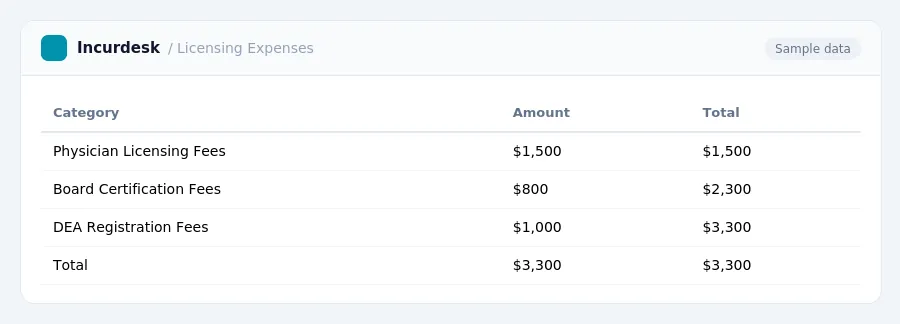
The DEA registration fee for most practitioners is $888 for a three-year period, effective in 2026. This fee applies to both new applications and renewals.
It's essential to note that a DEA registration is tied to a specific practice location. Clinicians practicing in multiple states generally need a separate registration per state, costing $888 per state per 3-year term.
The first DEA registration term can be shorter than three years, lasting between 28 and 39 months.
Keep in mind that some states have their own registration requirements. For example, Texas requires a biennial registration fee for physicians, which includes various statutory fees totaling $422.48, plus a $370 fee required by the TMB, for a total of $792.48 as of September 2025.
State Medical License Fees and Requirements
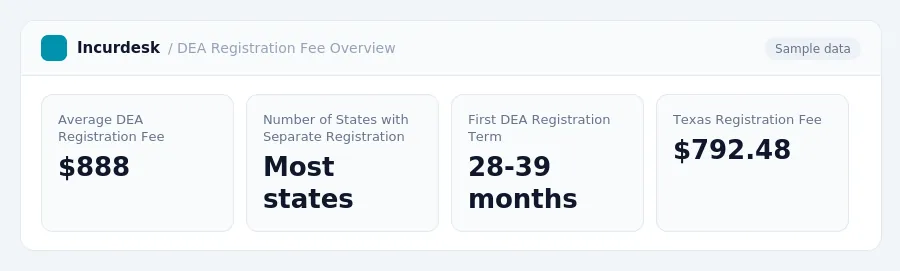
State medical license fees vary from state to state, with the lowest fee being $120 in Arkansas through June 30, 2026, and the highest being $1,425 in Nevada. The average state medical license application fee is approximately $496 as of April 2026. In addition to the application fee, physicians may also need to pay fees for the Interstate Medical Licensure Compact (IMLC) application, which is around $700, plus individual state licensing fees.
Continuing Medical Education (CME) costs can range from $200 to $1,000 per year, as many states require CME credits for license renewal. These costs are generally tax-deductible as ordinary and necessary business expenses for 2026, as are professional license fees and certifications related to a current business.
Physicians should check with their state medical board for specific licensing requirements and fees, as these can vary. It's also essential to note that temporary reduced fee schedules may be in effect, such as the reduced fee in Arkansas through June 30, 2026.
To estimate state medical license fees, you can check with your state medical board for the most up-to-date information. The cost of state medical licenses can add up, but they are generally a necessary expense for physicians to maintain their licenses and practice medicine.
Calculating Total Licensing Costs
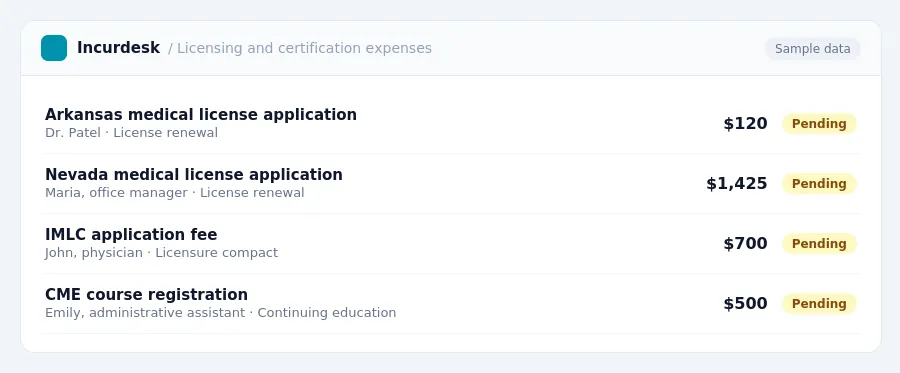
To determine your total licensing costs, you'll need to consider both the initial application fees and the annual renewal fees. The initial licensing fees to obtain a new professional license are considered startup costs and are not deductible as current business expenses.
For example, in California, the initial application fee for a medical license is $674, and the initial license fee is $1,176. This totals $1,850 for 2026. You can find the most up-to-date information on these fees by checking the California Medical Board website.
Here's an example:
Remember to check with your state's medical board for the most up-to-date information on licensing fees and requirements.
Tax Deductibility of Licensing Expenses
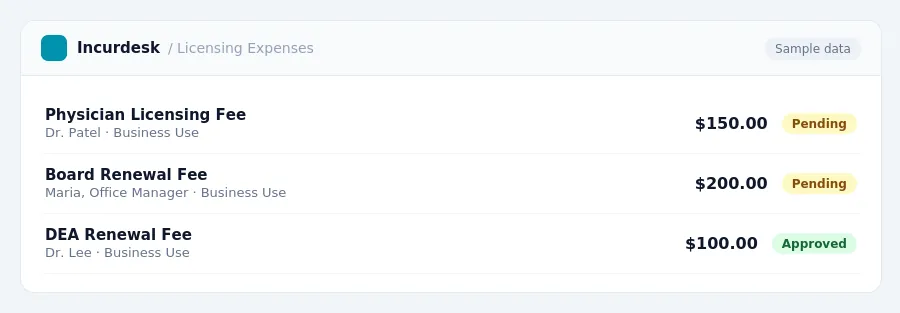
For small healthcare businesses, understanding the tax deductibility of physician licensing, board, and DEA renewal fees is crucial. As a self-employed individual, you can deduct qualifying education and professional development expenses on Schedule C for 2026. This means that you can claim deductions for these fees as business expenses, which can help reduce your taxable income.
To qualify for the deduction, make sure to keep accurate records of your expenses, including receipts, invoices, and bank statements. This will help you to accurately calculate your deductions and avoid any potential audits.
When claiming the deduction, you'll need to categorize your expenses as either "business use" or "personal use". Only expenses that are directly related to your medical practice can be claimed as business use. For example, if you attend a conference to improve your medical skills, the cost of the conference can be claimed as a business expense. However, if you use a hotel room for both business and personal activities, you can only claim the business use percentage of the expense.
For more information on qualifying expenses and how to claim the deduction, consult the IRS guidelines and tax laws for 2026. Keep in mind that tax laws are subject to change, so it's essential to stay up-to-date on any changes that may affect your business expenses.
State-Specific Variations and Budgeting
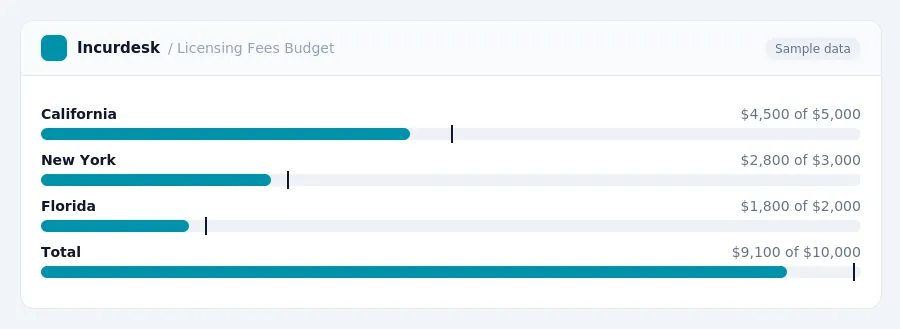
When it comes to budgeting for licensing fees, state-specific variations can significantly impact your costs. To accurately account for these expenses, you'll need to research the fees and requirements for each state where your practitioners are licensed. Start by gathering information on:
- State-specific licensing fees
- Renewal cycles and deadlines
- Any additional requirements, such as continuing education or background checks
Once you have this information, you can begin to calculate the total licensing costs for each state. Consider the following steps:
- Identify the states where your practitioners are licensed
- Calculate the total licensing fees for each state, including any additional requirements
- Consider any discounts or promotions that may be available
- Set aside a budget for each state to ensure timely payment of fees
Be sure to review and update your budget regularly to ensure that you're accurately accounting for these expenses. You may also want to consider implementing a system for tracking and paying licensing fees to ensure timely compliance with state regulations.
Tax rules, limits and rates change. Confirm current figures with the IRS or your accountant before you file.
Keeping this simple: Incurdesk keeps receipts and approvals together, so you know exactly what to reimburse. It is built for small healthcare teams. Try it free.
Stop losing 4+ hours a week
30-day free trial · No credit card · Setup in 15 minutes