
Reimbursing Travelling Nurses: Cost of Getting It Wrong
A practical, data-backed guide to controlling costs and automating expense workflows.
Reimbursing traveling nurses requires careful consideration of per diem rates, mileage, and tax implications to avoid penalties. healthcare expense management for under $10/user (2026). By following the one-year rule for assignments and implementing an accountable plan, businesses can ensure compliance and minimize financial risks.
Tax Implications of Travel Nurse Stipends
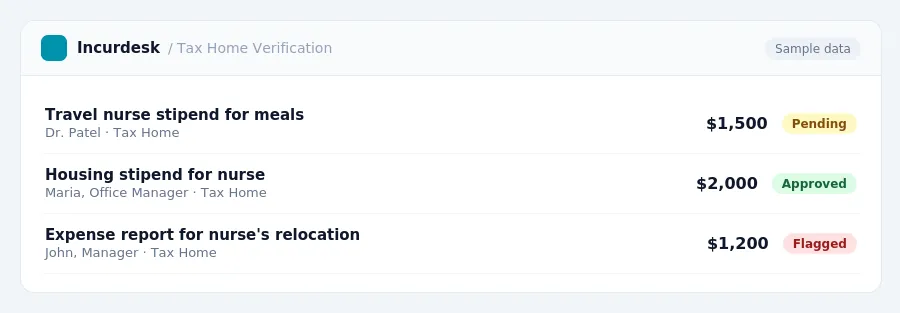
To ensure tax-free stipends for housing and meals, traveling nurses must maintain a qualifying 'tax home'. A tax home is a permanent residence to which the nurse regularly returns and incurs duplicate living expenses.
- If the nurse does not have a valid tax home, all stipends become taxable income.
The IRS considers an assignment temporary and stipends tax-free if it is realistically expected to last, and does last, one year or less.
- Assignments expected to last more than a year are considered indefinite from the start, making the location the nurse's tax home and stipends taxable.
Traveling nurses should keep accurate records to prove their tax home and assignment duration to avoid potential tax penalties.
Keeping this simple: Incurdesk lets your team snap a photo of a receipt and fills in the details for you. It is built for small healthcare teams. Try it free.
Accountable Plans and Compliance
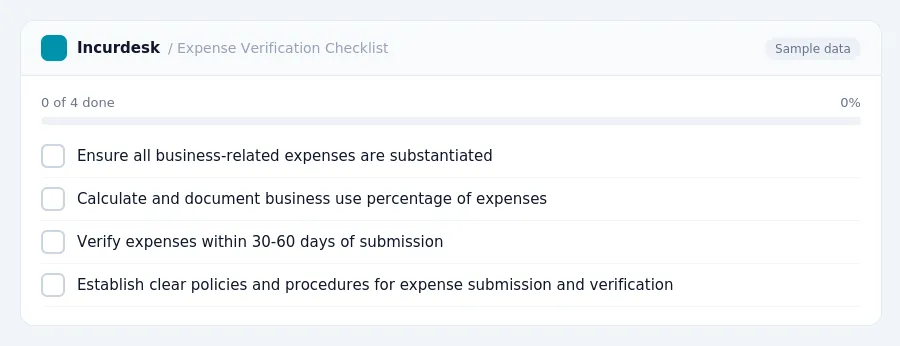
Having an accountable plan is crucial for small healthcare businesses to ensure compliance when reimbursing traveling nurses. An accountable plan requires that all business-related expenses be substantiated, and that the business use percentage of expenses be calculated and documented. This can be achieved through the use of a logbook or other record-keeping system to track miles driven, and receipts for meals and lodging.
Under an accountable plan, traveling nurses must submit their expense records to the employer within a reasonable time period, typically 30-60 days, and the employer must verify the expenses to ensure they are business-related. If the employer fails to verify the expenses, the reimbursement is considered taxable income to the nurse.
To maintain compliance, it is essential to establish clear policies and procedures for submitting and verifying expense records. This includes providing traveling nurses with a detailed explanation of the accountable plan and the requirements for submitting expense records.
Employers must keep records of all expense submissions and verifications for at least three years.
Employers should also consider having a third-party administrator review and verify expense records to ensure compliance and minimize the risk of penalties.
Ultimately, having an accountable plan in place will help small healthcare businesses avoid costly penalties and ensure that traveling nurses are reimbursed correctly and in compliance with tax laws.
Per Diem Rates and Business Use Expenses
The IRS has established per diem rates for lodging, meals, and incidental expenses (M&IE) for the period of October 1, 2026, to September 30, 2027. These rates vary depending on the locality.
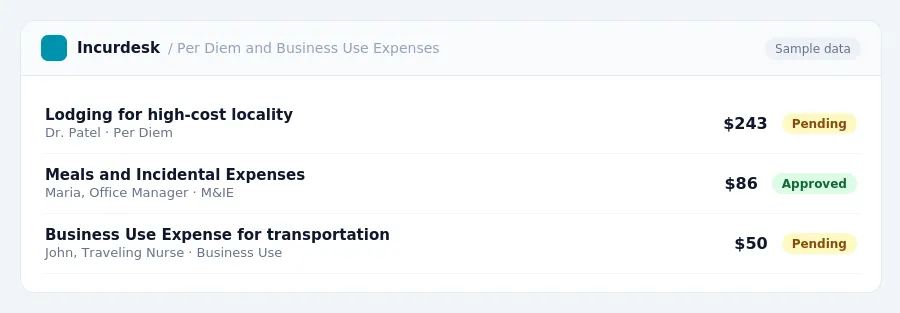
For high-cost localities, the per diem rate is $329 per day. This includes $243 for lodging and $86 for M&IE.
For other localities in the Continental US, the per diem rate is $230 per day. This includes $156 for lodging and $74 for M&IE.
When reimbursing traveling nurses, you must use the per diem rate that corresponds to the location of their assignment. If the location is not listed as a high-cost or other locality, you can find the rate on the IRS website.
Keep in mind that per diem rates only cover actual expenses incurred by the traveling nurse. You may need to use a business use expense calculation to determine the actual expenses incurred by the nurse.
Business use expenses include items such as:
- Lodging
- Meals
- Incidental expenses
- Tolls
- Parking fees
Keep accurate records of these expenses to ensure compliance with IRS regulations.
Review the IRS website for the most up-to-date information on per diem rates and business use expenses.
Mileage Reimbursement and Overtime Requirements
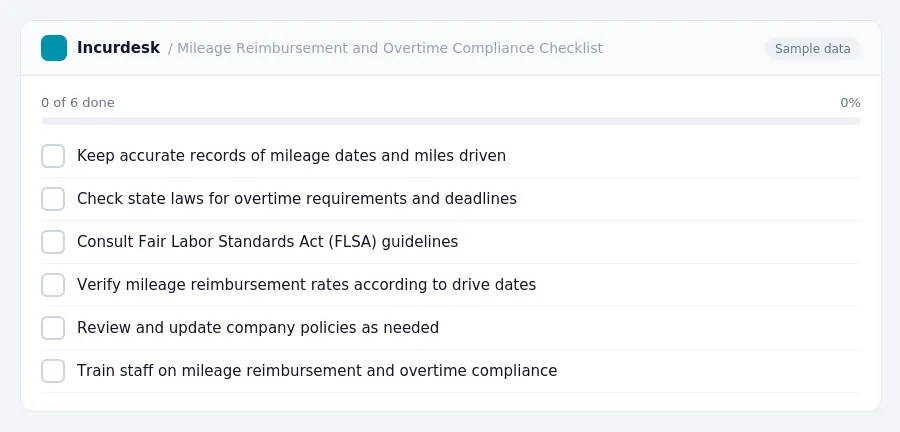
The date of the drive determines the mileage rate used, not the date of submission or payment.
Under the Fair Labor Standards Act (FLSA), employers must pay overtime to employees who work more than 40 hours in a workweek. Some states have daily overtime requirements or higher salary thresholds for exemption that may be more favorable to the employee. It's essential to check state laws to ensure compliance.
When calculating mileage reimbursement, keep accurate records of the date, start and end points of the trip, and miles driven. This will help prevent errors and ensure compliance with FLSA overtime requirements. Consult state laws for specific requirements and deadlines.
Nursing Licensure and Multistate Requirements
Nursing licensure is a crucial aspect of the travel nursing industry, and employers must understand the requirements to avoid penalties and ensure compliance.
Each state requires nurses to be licensed by a Board of Nursing (BON). Employers should verify the licensure requirements for each state where their travel nurses will be working.
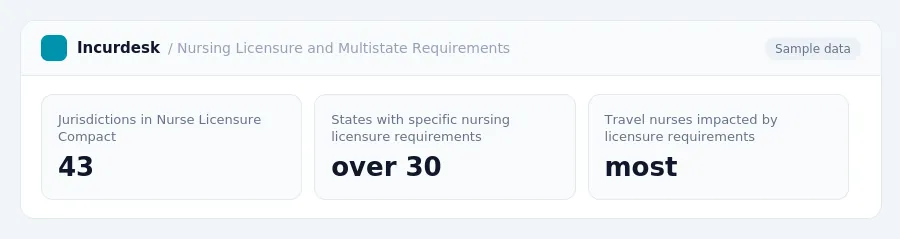
The Nurse Licensure Compact (NLC) streamlines licensure for participating states. As of 2026, 43 jurisdictions participate in the NLC, allowing for multistate licenses. Employers should check if the states where their travel nurses will be working participate in the NLC to determine if a multistate license is required.
Employers should also be aware that each state has its own specific requirements for nursing licensure, and the NLC does not supersede these requirements.
To ensure compliance, employers should:
- Ensure that their travel nurses have the necessary licenses to practice in each state.
Stop losing 4+ hours a week
30-day free trial · No credit card · Setup in 15 minutes