Rental Equipment vs Owned
Real trade-offs, pricing & decision guide — updated November 2026
For small catering businesses, a key consideration when deciding between renting and owning equipment is the upfront cost. When it comes to rental equipment, the initial investment can vary widely depending on the type and quality of the equipment, with some high-end units costing upwards of $5,000. In contrast, the cost of owning similar equipment can be significantly lower, with the initial purchase price ranging from $1,000 to $10,000, depending on the brand, model, and features. For the bigger picture, see our guide to catering companies expense management software. For a complete overview, see our expense management guide.
Equipment Costs and Tax Benefits
As a small catering business, you may be considering whether to rent or purchase equipment. When deciding between the two, it's essential to understand the costs and tax benefits associated with each option.
Renting equipment can save you money upfront, but you'll need to factor in ongoing expenses, such as rental payments, insurance, and maintenance. Rentals can range from a few hundred to several thousand dollars per month, depending on the equipment and location.
On the other hand, purchasing equipment can provide long-term savings, as you'll be able to claim a significant deduction on your tax return. The Section 179 deduction allows you to expense up to $2,560,000 of qualifying equipment purchases for tax years beginning in 2026. However, this deduction begins to phase out dollar-for-dollar once total qualifying purchases exceed $4,090,000 for tax years beginning in 2026.
To maximize your tax benefits, it's essential to use Section 179 first for targeted assets and then apply bonus depreciation to remaining qualified property. Additionally, you can combine Section 179 and bonus depreciation to further reduce your taxable income.
When deciding between renting and purchasing equipment, consider your business's specific needs and financial situation. If you're unsure, consult with a tax professional or accountant to determine the best option for your business.
Purchasing vs Renting Commercial Kitchen Equipment
When deciding between renting and owning commercial kitchen equipment, it's essential to consider your specific needs and financial situation. Here are the key factors to consider:
- Initial Investment: When you rent, you typically pay a flat rate per day or per month for the equipment. In contrast, purchasing equipment involves paying a significant upfront cost, which can be a one-time expense or spread out over several years.
- Ongoing Expenses: Renting equipment means you'll pay a rental fee, which can vary depending on the state and locality. When you own equipment, you'll also incur ongoing expenses such as maintenance, repair, and replacement costs.
- Tax Benefits
- Flexibility and Scalability: Renting allows you to easily move equipment to different locations or adjust your operations as needed. Owning equipment can be more expensive to adapt to changes in your business, but it can also provide more control over your equipment.
- Liability: When you rent equipment, you're typically not liable for damages or losses. When you own equipment, you're responsible for any damage or losses, which can impact your business's financial stability.
- Warranty and Support: Renting equipment often comes with a manufacturer's warranty and support. When you own equipment, you'll typically need to purchase or lease a warranty and support package.
- Depreciation and Amortization: Rental equipment typically has a shorter depreciation period, while owning equipment can result in higher upfront costs and longer amortization periods.
Rental Equipment vs Owned: Cost Comparison
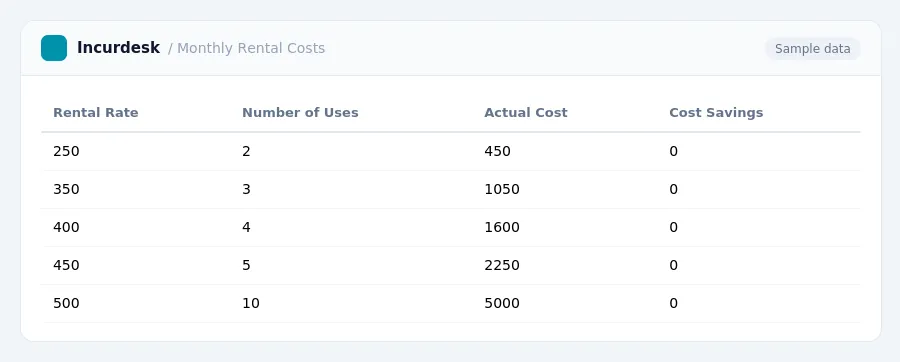
In most states, sales tax applies to equipment rentals, typically added to rental payments. Rates vary by state and locality, generally ranging from 2.9% to 7.25% plus local add-ons. For items like chafing dishes, owning can be cheaper than renting after 2 to 5 uses, depending on the rental cost versus purchase price.
When deciding between renting and owning equipment, consider the following factors:
- 2 to 5 uses: If you plan to use the equipment frequently, owning might be more cost-effective.
- Rental duration: If you only need the equipment for a short period, renting might be more practical.
- Rental cost: Compare the rental fees to the purchase price of the equipment to determine the overall cost.
- Tax implications: If you expect to use the equipment frequently, owning can save you money on sales tax.
- Warranty and maintenance: If you're not sure how long the equipment will last, renting can provide access to maintenance and repair services.
By considering these factors, you can make an informed decision about whether to rent or own equipment for your small catering business.
The rules in this guide
| Amount | Required | In Incurdesk |
|---|---|---|
| Above $75 | Itemised receipt | Checked on every expense |
| Above $250 | Written business purpose | Checked on every expense |
| Above $500 | Names of attendees | Checked on every expense |
| Above $5,000 | Senior sign-off; never auto-approved | Checked on every expense |
Each rule is checked on every expense by Incurdesk’s approval agent.
When to Rent vs Buy
In a true operating lease, payments are deductible as rent. In a capital lease (treated as a purchase), the lessee claims depreciation and Section 179, and payments are treated as loan principal and interest. This means that the lessee can write off the full cost of the equipment as a business expense, reducing their taxable income.
For small catering businesses, this can be a significant advantage. By renting equipment, businesses can avoid the upfront costs of purchasing and maintaining equipment, and then claim the full cost as a business expense on their taxes. This can be especially beneficial in the early stages of business, when cash flow is limited and it's harder to afford initial equipment purchases.
Additionally, rental equipment can be more flexible and easier to move around, making it ideal for businesses that need to relocate or adjust their operations frequently. This can be particularly important for catering businesses that operate in different locations, or have seasonal fluctuations in demand.
It's worth noting that rental equipment can also provide tax benefits, such as deducting depreciation and interest on loans. However, these benefits are only available if the business meets certain requirements, such as being a qualifying business and meeting specific eligibility criteria.
Comparing Rental and Ownership Costs
Rental equipment can be a cost-effective option for small catering businesses with specific operational needs and financial situations. This is particularly true for businesses with:
- High equipment utilization rates or frequent equipment changes
- Limited storage space or equipment maintenance requirements
- A short-term commitment to catering services
- Inadequate budget for equipment purchases or maintenance
When to Rent:
- If you're just starting out or transitioning to a new catering business
- If you have a high equipment utilization rate or frequent equipment changes
- If you're unsure about the long-term maintenance and repair needs of your equipment
When to Buy:
- If you have a fixed budget for equipment purchases and maintenance
- If you require high-quality or specialized equipment
- If you plan to maintain your equipment for an extended period
When to Rent:
When to Buy:
- If you require high-quality or specialized equipment
Tax rules, limits and rates change. Confirm current figures with the IRS or your accountant before you file.
AI expense management for finance teams and whoever keeps the books. It checks every expense against your rules, approves the routine ones and chases missing receipts for you.
Try it free for 30 days →Neither gets it right. Incurdesk does.
30-day free trial. No credit card. Setup takes 15 minutes.