
Tracking Grant-Funded Expenses in Community Health Centers
A practical, data-backed guide to controlling costs and automating expense workflows.
Community health centers can effectively track grant-funded expenses by following federal regulations, such as Uniform Guidance, and utilizing proper record-keeping for personnel costs, cost sharing, and equipment definitions. To streamline healthcare expense management for under $10/user (2026), consider implementing a centralized system that ensures compliance with reporting obligations like the Federal Financial Report (FFR) and FFATA. By avoiding common mistakes like over-reliance on spreadsheets and poor documentation, CHCs can meet deadlines and maintain accurate financial records. For a complete overview, see our expense management guide.
Categorize Grant Expenses
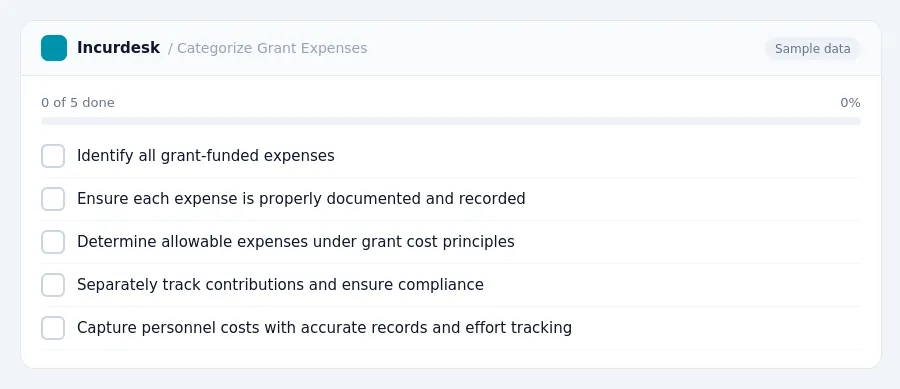
Grant expenses must be categorized according to the Uniform Guidance framework (2 CFR Part 200) and align with the approved budget categories and funder restrictions. To ensure compliance, follow these steps:
- Identify all grant-funded expenses, including personnel costs, equipment purchases, and contributions. Ensure that each expense is properly documented and recorded.
- Determine which expenses are allowable under grant cost principles. Contributions, for example, must be backed by records and sourced from nonfederal funds.
- Separately track contributions (cash or in-kind) and ensure they meet the Uniform Guidance requirements. Contributions must be allowable under grant cost principles and sourced from nonfederal funds.
- For personnel costs, ensure that salary and wages are based on records that accurately reflect the work performed. Effort must be captured by each grant/project number.
- For Provider Relief Fund (PRF) payments, ensure that expenses are used to prevent, prepare for, and respond to coronavirus, and that these expenses have not been reimbursed from other sources.
Remember to regularly review and update your categorization system to ensure it remains accurate and compliant with federal regulations.
Document Grant-Funded Expenses
Contemporaneous documentation is required for grant-funded expenses. This includes:
- Receipts
- Invoices
- Contracts
- Payroll records
- Time sheets
These documents should be kept on file to support grant expenses. The Federal Funding and Transparency Act (FFATA) requires reporting on sub-awards of $30,000 or more for non-Recovery Act funded grants and cooperative agreements. Be sure to track and document these sub-awards accordingly.
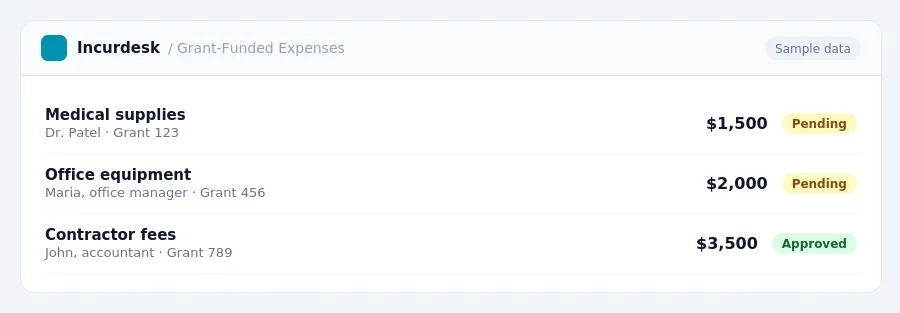
For example, you may need to maintain records of:
Keep these records organized and easily accessible to ensure accurate tracking and reporting of grant-funded expenses.
Allocate Personnel Costs
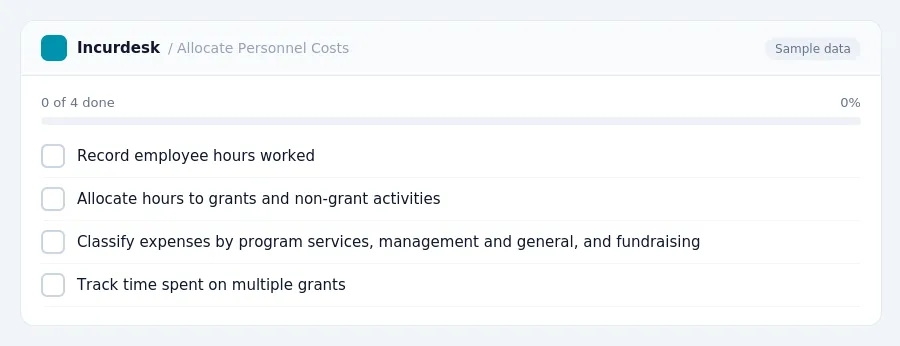
- When allocating personnel costs, it's essential to keep accurate time-and-effort records. These records must show how employee hours were allocated across grants and non-grant activities. This will help ensure compliance with federal regulations and provide a clear picture of how personnel costs are being utilized. For example, if an employee works 40 hours a week, 20 hours might be allocated to a specific grant, while the remaining 20 hours are spent on non-grant activities. The form requires nonprofits to classify expenses across program services, management and general, and fundraising. When allocating personnel costs, make sure to follow these guidelines to ensure accurate reporting.
- ...
For instance, if an employee works on multiple grants, you'll need to track the time spent on each project. This can be done using a simple spreadsheet or a more advanced tracking system. The key is to ensure that the time spent on each grant is accurately recorded and reflected in the final report.
When allocating personnel costs, it's also essential to consider the concept of "cost sharing." This refers to the practice of allocating costs between different grants or funding sources. This will help ensure that the organization is meeting its obligations under the grant agreement.
By following these guidelines and maintaining accurate time-and-effort records, you can ensure that personnel costs are allocated correctly and that your organization is in compliance with federal regulations.
- Keep accurate time-and-effort records to ensure compliance with federal regulations.
- Document allocations across grants and non-grant activities.
- Consider cost sharing when allocating personnel costs.
Track Contributions and Equipment
Community health centers should keep accurate records of contributions, including in-kind donations and sponsorships, and ensure these are properly accounted for in their financial statements.
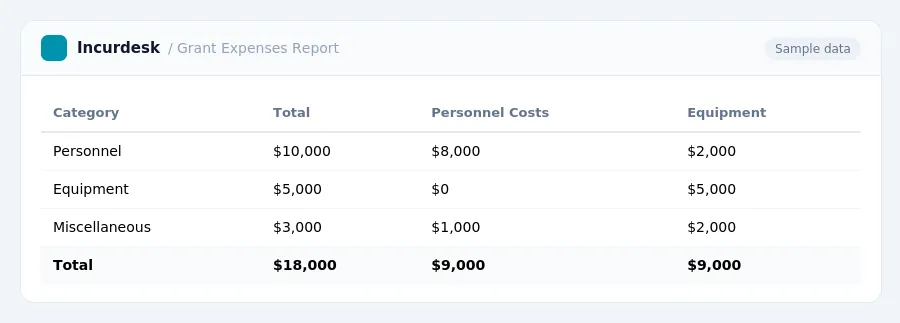
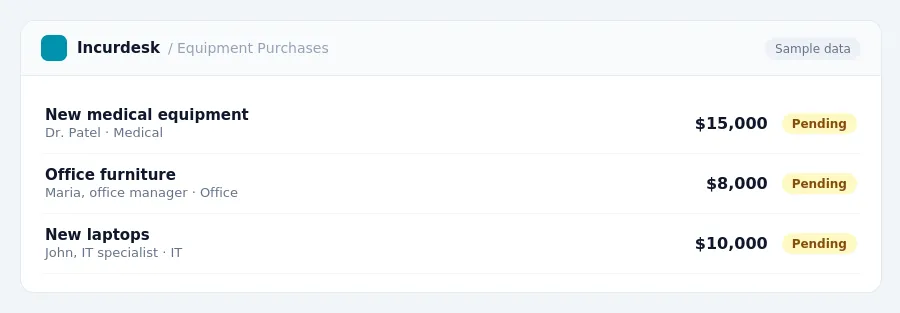
When it comes to equipment, follow the Uniform Guidance definition: tangible personal property with a useful life greater than one year and a per-unit cost of $10,000 or more. For example, laptops costing $1,500 each are not considered equipment under this definition.
Keep a detailed inventory of equipment, including purchase dates, costs, and descriptions. This will help you accurately track the value of equipment and ensure compliance with grant requirements.
- Keep a record of all equipment purchases, including receipts and invoices.
- Update your inventory regularly to reflect any changes, such as equipment being replaced or retired.
- Ensure that equipment is properly maintained and used for grant-funded purposes.
Submit Required Reports
-
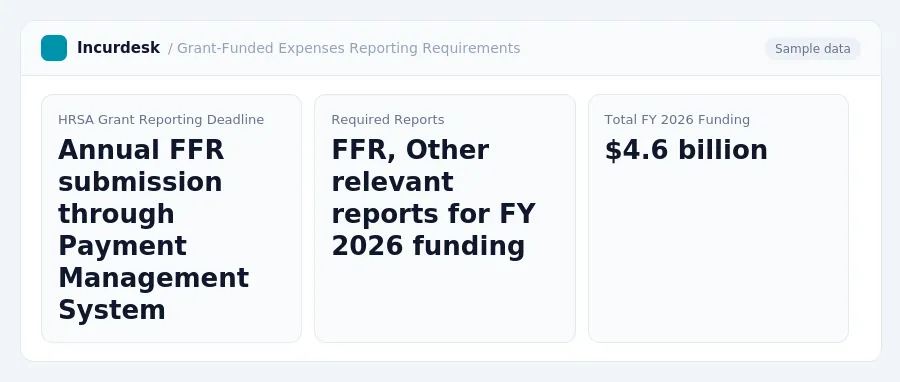
Recipients of HRSA grants must submit an FFR annually through the Payment Management System.
For the FY 2026 funding, which totals $4.6 billion, including $350 million for the National Health Service Corps and $225 million for Teaching Health Center Graduate Medical Education, ensure you meet the reporting deadline.
Here are the required reports and their submission details:
Keeping this simple: Incurdesk turns submitted expenses into clean expense reports. It is built for small healthcare teams. Try it free.
Stop losing 4+ hours a week
30-day free trial · No credit card · Setup in 15 minutes