
Tracking Home Health Visit Mileage for Reimbursement
A practical, data-backed guide to controlling costs and automating expense workflows.
For the bigger picture, see our guide to healthcare expense management for under $10/user (2026).
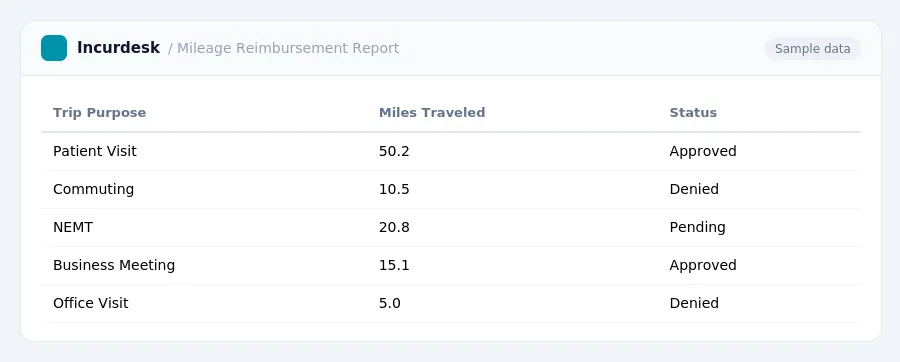
To qualify, the trip must have a clear business purpose and not be a commute from home to the first visit or from the last visit back home. For example, a home health aide might drive from one patient's home to another patient's home, but not from their own home to the first patient's home.
Business Purpose Requirements:
- The trip must have a clear business purpose, such as visiting a patient.
- Commuting from home to the first visit and from the last visit back home are generally not reimbursable.
NEMT Rules:
Non-Emergency Medical Transportation (NEMT) rates can vary significantly by state and payer. For "loaded" miles (miles traveled with a patient), specific rules apply, but the exact rates and rules vary by state and payer. Check with your state and payer for specific requirements.
Document Staff Travel with Contemporaneous Mileage Logs
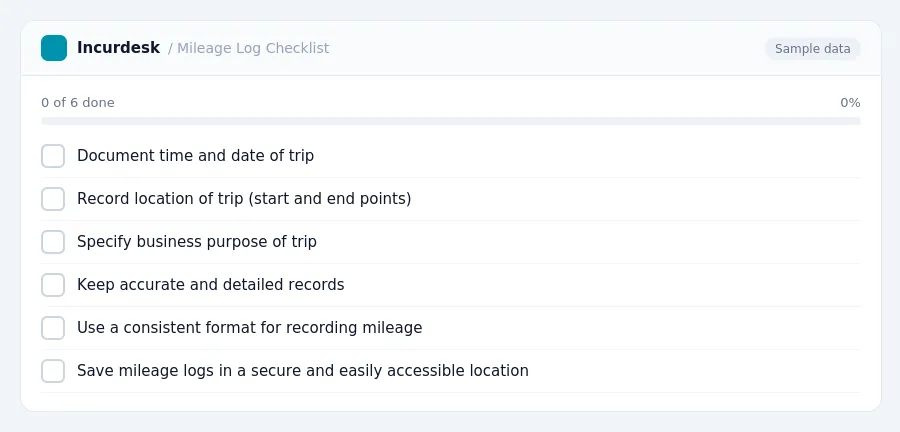
Documenting staff travel is crucial for accurate reimbursement. This log should include:
- The time and date of the trip
- The location of the trip (start and end points)
- The business purpose of the trip
To ensure accurate reimbursement, workers should record the mileage log as soon as possible after each trip.
When maintaining mileage logs, workers should keep the following in mind:
- Keep accurate and detailed records
- Use a consistent format for recording mileage
- Save mileage logs in a secure and easily accessible location
By following these guidelines, workers can ensure accurate and compliant mileage reimbursement for their home health visits.
- This means that you must have contemporaneous substantiation of the mileage and return any excess reimbursements to the employee.
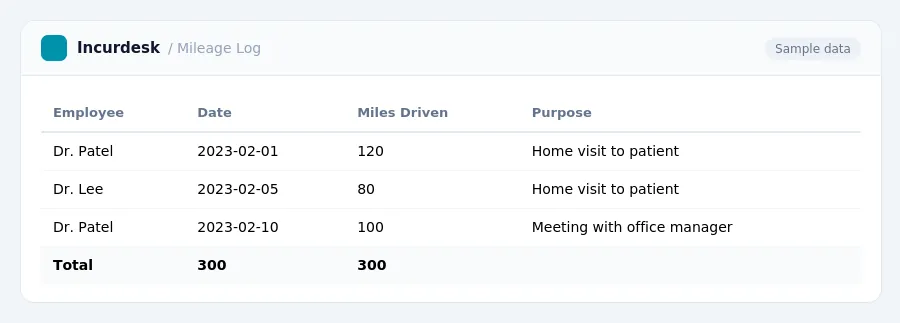
- Keep accurate records of the mileage reimbursed to each employee. You can use a mileage log or a spreadsheet to track the miles driven, dates, and purposes of the trips.
- For example, you can create a table like this:
- At the end of each month, review the mileage logs and reimburse employees for the actual miles driven.
- Return any excess reimbursements to the employee.
Review State and Local Requirements for Business Expense Reimbursement
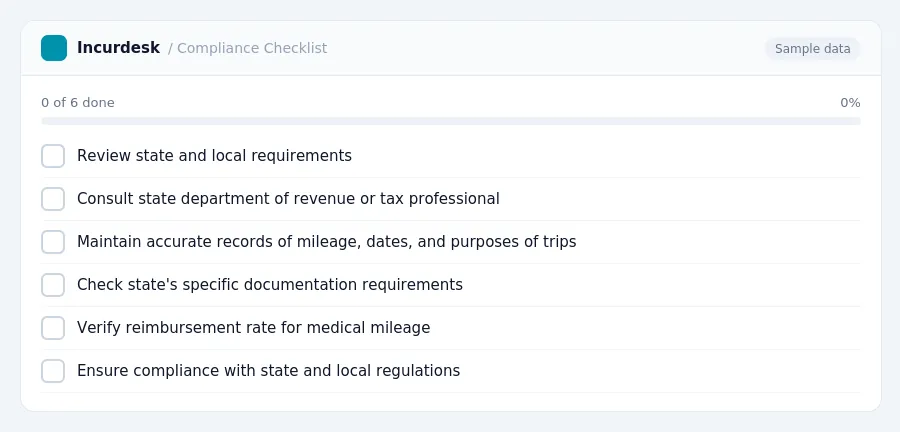
This means that you must review state and local requirements to ensure compliance. Consult your state's department of revenue or a tax professional to determine specific requirements.
Check your state's rate to ensure you are reimbursing staff correctly.
Additionally, some states have specific documentation requirements for business expense reimbursement. For instance, you may need to keep a log of mileage, dates, and purposes of trips. Be sure to check your state's requirements and maintain accurate records.
If you are reimbursing staff for medical mileage, ensure you are using this rate.
Remember to review your state's specific requirements and maintain accurate records to ensure compliance with state and local regulations.
Keeping this simple: Incurdesk keeps receipts and approvals together, so you know exactly what to reimburse. It is built for small healthcare teams. Try it free.
Stop losing 4+ hours a week
30-day free trial · No credit card · Setup in 15 minutes