
Trust Account vs Operating Account Expenses Explained
A practical, data-backed guide to controlling costs and automating expense workflows.
As a small law firm owner or office manager, understanding the difference between your operating account and client trust account (often IOLTA account) is crucial for effective expense management for law firms. Your operating account is for business expenses, while your client trust account is for client funds, such as advance payments and earned fees. To avoid disciplinary actions and financial repercussions, it's essential to keep these funds separate and adhere to the strict rules governing each.

Distinguishing Between Operating and Trust Accounts
To maintain compliance and avoid disciplinary actions, it's essential to understand the difference between operating and trust accounts. A trust account, often an IOLTA account, is a dedicated bank account used exclusively to hold client funds that have not yet been earned by the firm. These accounts are used to hold client funds such as retainers, settlement proceeds, advanced court costs, or escrow payments.
To determine which account to use, consider the following:
Client funds must never be mixed with the firm's operating funds or an attorney's personal money. This rule applies in every state and is a cornerstone of trust accounting. For example, if a client pays a retainer, the funds should be deposited into the trust account, not the operating account. If you're unsure which account to use, follow these guidelines:
- If the funds are client money, use the trust account.
- If the funds are for firm expenses, use the operating account.
Remember, attorneys have a fiduciary obligation to protect client funds held in trust, meaning they have a legal duty to safeguard these assets.

Understanding the Purpose and Rules of Trust Accounts
Trust accounts, also known as IOLTA (Interest on Lawyers' Trust Accounts) accounts, are designed to hold client funds, such as advance payments for services, settlement proceeds, and other monies that belong to clients. The primary purpose of these accounts is to safeguard client funds and maintain their integrity.
The rules governing trust accounts are strict and must be followed to avoid any potential issues. Here are some key rules to keep in mind:
- Trust accounts must never go into the negative. An overdraft typically triggers an automatic notification to the state bar from the bank.
- Funds in trust accounts must be kept separate from the law firm's operating funds at all times.
When it comes to trust account management, it's essential to maintain accurate records and ensure that all transactions are properly documented. This includes:
- Recording all deposits, withdrawals, and transfers into and out of the trust account.
- Verifying the identity of all parties involved in transactions.
- Keeping detailed records of all account activity.
By following these rules and maintaining accurate records, small law firms can ensure compliance with trust account regulations and protect client funds.
Operating Account Expenses: What's Permitted and What's Not
When managing your small law firm's operating account, it's essential to understand what expenses are allowed and what's not. Commingling, or mixing client funds with firm funds, is strictly prohibited. This means you cannot:
- Deposit client money into your operating account
- Use trust funds for business expenses before they are earned
Funds in your operating account should only be used for business expenses that have already been earned. Any client funds should be promptly deposited into a trust account, and money should only leave the trust account once it is earned or the client authorizes disbursement.
Additionally, if a client's funds are large enough or held long enough to earn meaningful interest after accounting for bank fees, you may need to set up a separate interest-bearing account for that client. In this case, the interest earned belongs to the client.
| Expense Type | Permitted | Not Permitted |
|---|---|---|
| Business expenses already earned | Yes | |
| Client money deposited into operating account | Yes | |
| Using trust funds for business expenses before earned | Yes | |
| Interest earned on client funds | Client's interest | Firm's interest |

Trust Account Requirements and Best Practices
Retainers are considered unearned fees and must be deposited into the trust account. They only become firm revenue once the work is performed and billed. Be sure to follow these best practices:
- Deposit retainers into the trust account immediately upon receipt.
- Keep detailed records of all transactions, including deposits and disbursements.
- Maintain a clear audit trail of all trust account activity.
- Ensure that the trust account is reconciled regularly.
The American Bar Association's Model Rule 1.15 requires lawyers to safeguard client property, keep it separate, and maintain complete records. To comply with this rule:
- Segregate client funds from the firm's operating funds.
- Use trust account records to track all client transactions.
- Keep all trust account records for at least 7 years.
Follow these guidelines to ensure compliance with trust account regulations and maintain the trust of your clients.

Compliance and Disciplinary Actions: What Small Law Firms Need to Know
Compliance with trust account regulations is crucial for small law firms to avoid disciplinary actions and financial repercussions. Firms must store all bank statements, client ledgers, deposit slips, and disbursement records for at least five years, although some state bars may require longer. Electronic retention is increasingly required, so be sure to check with your state bar for specific requirements.
- Store all trust account records for at least five years.
- Check with your state bar for specific electronic retention requirements.
California attorneys have an additional requirement: starting January 1, 2026, they must provide the name and State Bar license number of a "designated licensee" to financial institutions when opening or maintaining trust accounts. Failing to comply with these regulations can result in disciplinary actions, fines, and reputational damage.
Be proactive in ensuring compliance with trust account regulations. Review your firm's procedures regularly to ensure you are meeting all requirements. If you're unsure about specific regulations or requirements, consult with your state bar or a qualified expert for guidance.
| Action | Deadline |
|---|---|
| Varies, check with your state bar | |
| Varies, check with your state bar | |
| January 1, 2026 |

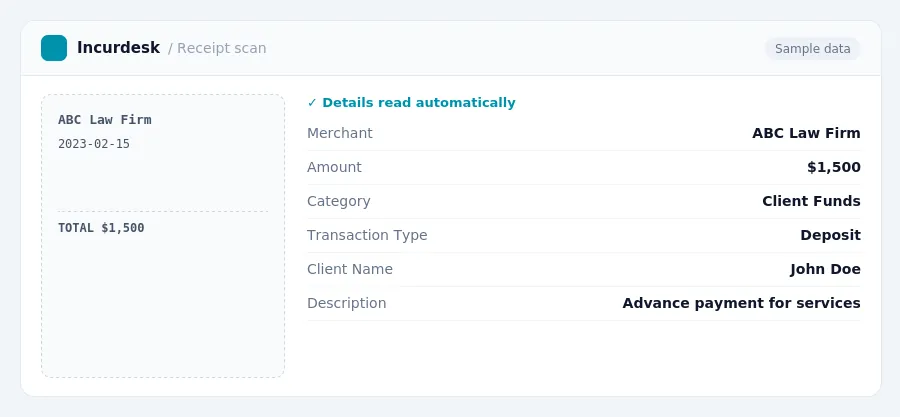
Keeping this simple: Incurdesk lets your team snap a photo of a receipt and fills in the details for you. It is built for small law firm teams. Try it free.
Stop losing 4+ hours a week
30-day free trial · No credit card · Setup in 15 minutes