
What a Failed Grant Audit Actually Costs
A practical, data-backed guide to controlling costs and automating expense workflows.
Furthermore, a failed audit can lead to a loss of public trust, damaging the organization's reputation and making it more challenging to secure future funding. Effective expense management for non-profit organizations is crucial to avoid such costly consequences.
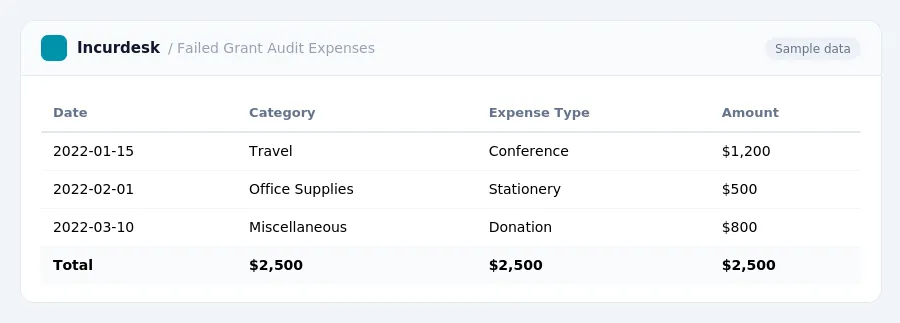
Common Pitfalls and Compliance Issues
Small nonprofits must be aware of common compliance issues that can lead to audit failures.
- Incorrectly recording donations, grants, or expenses according to strict nonprofit accounting rules can lead to compliance issues, inaccurate financial statements, and audit adjustments.
- Mixing restricted and unrestricted funds without a clear separation trail can lead to compliance issues and donor dissatisfaction.
- Serious compliance violations can lead to an organization being suspended or debarred from receiving future federal funding.
Nonprofits must ensure accurate and transparent financial reporting to maintain public trust and avoid compliance issues.
To avoid compliance issues, nonprofits should:
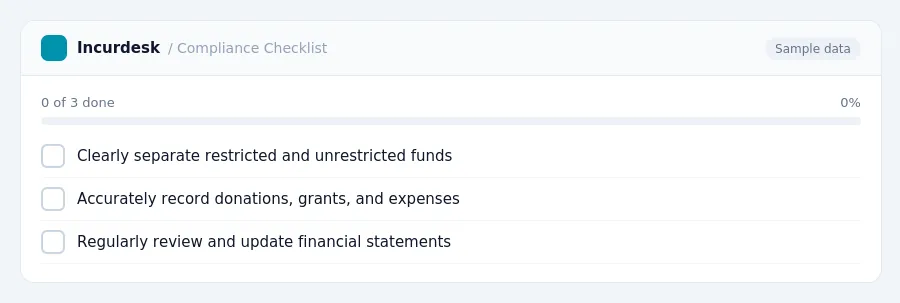
- Clearly separate restricted and unrestricted funds.
- Accurately record donations, grants, and expenses in accordance with nonprofit accounting rules.
- Regularly review and update financial statements and records to ensure accuracy and compliance.
Nonprofits should also seek professional guidance if unsure about specific compliance requirements or procedures.
Keeping this simple: Incurdesk keeps receipts and approvals in one place, which makes a written policy easier to follow. It is built for small non profits teams. Try it free.
Repercussions and Financial Impacts
A failed grant audit can result in significant financial repercussions for small nonprofits. In one instance, a review found $696,017 in unallowable costs and nearly $5 million unsupported, leading to a recommended refund of $967,387.
- Financial penalties**: Refunds, fines, or settlements may be required to rectify errors or omissions.
- Loss of funding**: A failed audit can lead to loss of future funding, as grantors may view the organization as non-compliant or unreliable.
- Operational disruptions**: Correcting errors or implementing new procedures can disrupt ongoing operations and impact services provided.
It's essential to take proactive steps to prevent audit failures and ensure compliance. Review your organization's financial records regularly to identify potential issues, and consult with experts if needed.
Audit Triggers and Thresholds for Nonprofits
Understanding the audit triggers and thresholds for nonprofits is crucial to ensure compliance and avoid costly repercussions. Here are some key factors to consider:
Nonprofits expending $1,000,000 or more in federal awards during a fiscal year are generally required to undergo a Single Audit. This threshold applies to federal awards, including pass-through funding from state or local governments.
Some states, however, do not have a specific audit tier. Colorado, North Carolina, Oregon, Texas, and Virginia rely instead on Form 990 or state financial forms.
Many foundations and government agencies may require an independent audit as a condition of receiving or continuing to receive funds.
It's also worth noting that negative audit results can significantly undermine trust among stakeholders, donors, and the community, impacting future fundraising efforts.
Individuals found responsible for severe mismanagement may be barred from serving in leadership roles for other nonprofits in the future.
When determining whether your nonprofit requires an audit, check with your funding sources to see if they have specific requirements. You can also check with your state's nonprofit regulatory agency for more information on audit thresholds and requirements.
Consequences of a Failed Grant Audit
A failed grant audit can have serious financial and operational consequences for small nonprofits. One common consequence is the demand to repay funds that cannot be properly documented or were not used in accordance with the grant agreement.
Missing receipts, incomplete records, and late reconciliations make it difficult to demonstrate transparency and compliance, potentially leading to audit findings or the need to return grant funds.
Failing to adhere to the specific spending rules and reporting requirements of grant agreements can result in repayment demands or loss of future funding. Each grant agreement has unique terms, conditions, and reporting requirements, so it's essential to carefully review and understand the specific requirements of each agreement.
Nonprofits should ensure they have complete and accurate records, including receipts, invoices, and bank statements, to support their grant expenditures. They should also maintain timely and accurate reconciliations to demonstrate compliance with grant agreements.
Preventing Audit Failures and Ensuring Compliance
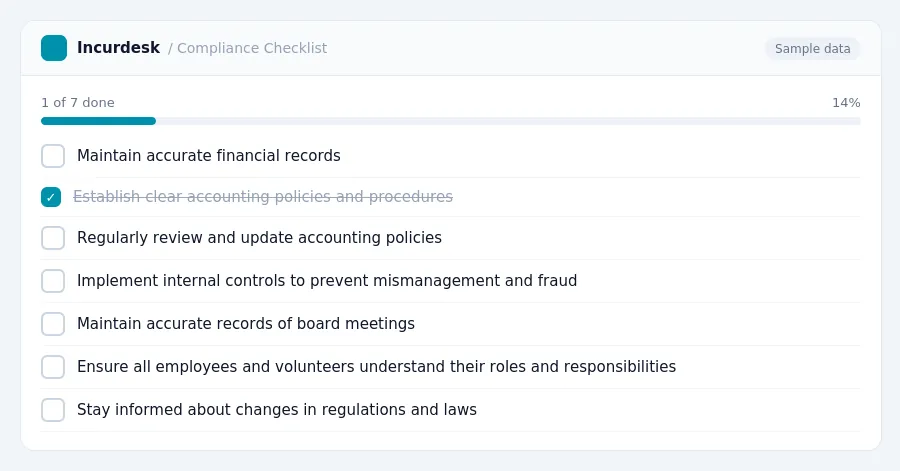
To prevent audit failures and ensure compliance, small nonprofits must maintain accurate and detailed financial records, including receipts, invoices, and bank statements. They should also establish clear accounting policies and procedures, and regularly review and update them as needed.
- Ensure that all grant funds are properly accounted for and that expenses are reasonable and necessary.
- Implement internal controls to prevent mismanagement and fraud, such as regular audits and independent reviews.
- Maintain accurate and up-to-date records of board meetings, including minutes and attendance.
- Ensure that all employees and volunteers understand their roles and responsibilities in maintaining compliance.
Additionally, nonprofits should stay informed about changes in regulations and laws affecting their operations. They should also consider seeking the advice of a qualified accountant or attorney to ensure compliance with all applicable laws and regulations.
It's also worth noting that severe or repeated compliance failures can result in the revocation of a nonprofit's tax-exempt status. Directors and officers can be held personally liable for penalties and lost funds if mismanagement or fraud is exposed, and in some cases, charitable assets cannot be used to cover these costs.
Stop losing 4+ hours a week
30-day free trial · No credit card · Setup in 15 minutes