
When a Clinic Should Move Off Manual Expense Approvals
A practical, data-backed guide to controlling costs and automating expense workflows.
Small healthcare businesses with 5-50 employees often struggle with manual expense approval processes, which can become inefficient and costly when handling more than 100 expense reports per month. At this point, transitioning to an automated system can help streamline operations and reduce administrative burden. With healthcare expense management for under $10/user (2026)
Regulatory Compliance and Automation
This means that your business needs to be prepared to adapt quickly to new regulations.
Be sure to familiarize yourself with the regulations in your state and ensure that your automated system is compliant.
To ensure compliance, consider the following steps:
By prioritizing regulatory compliance and automation, you can minimize the risk of non-compliance and ensure the security of your patients' data.
Keeping this simple: Incurdesk lets your team snap a photo of a receipt and fills in the details for you. It is built for small healthcare teams. Try it free.
Streamlining Operations with Automated Systems
Automated expense approval systems can significantly reduce administrative burden and free up staff to focus on more critical tasks. This change will require healthcare businesses to reassess their current systems and consider implementing automated solutions that can integrate with existing MFA protocols.
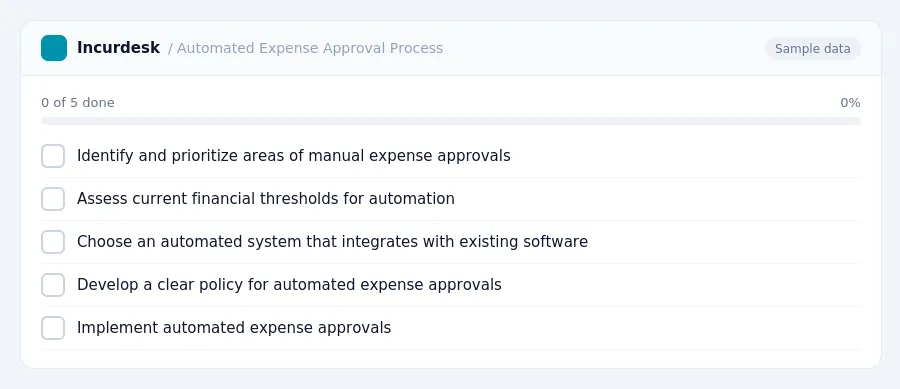
To streamline operations, consider the following steps:
- Identify and prioritize areas where manual expense approvals are causing inefficiencies.
- Assess the current financial thresholds for automation, taking into account the costs of manual processing and the potential savings from automation.
- Choose an automated system that can integrate with existing financial and accounting software, and provide real-time tracking and reporting.
- Develop a clear policy for automated expense approvals, including guidelines for employee access and use of the system.
By implementing an automated expense approval system, small healthcare businesses can reduce administrative burden, improve compliance, and increase operational efficiency.
When to Move Beyond Manual Expense Approvals
As your healthcare business grows, so does the complexity of your financial operations. Manual expense approvals can become a bottleneck, slowing down your staff and wasting valuable time. Here are some signs that it's time to move beyond manual expense approvals:
- Your staff spends more than a few hours per week on expense tracking and approval.
- You have multiple people involved in the approval process, leading to delays and confusion.
- You're struggling to keep track of receipts, invoices, and other supporting documents.
- You're missing deadlines for reimbursement or struggling to meet financial reporting requirements.
Consider the following questions:
- Are your staff members using a lot of time and effort to track and approve expenses?
- Are there frequent delays in the approval process?
- Are you experiencing difficulties in maintaining accurate and up-to-date financial records?
Take a closer look at your current process and assess whether it's causing more problems than it's solving. If you answered "yes" to any of these questions, it may be time to explore automated expense approval solutions to streamline your financial operations and free up your staff to focus on more important tasks.
Financial Thresholds for Automation
When determining whether to automate your expense approval process, consider the volume and frequency of expense reports. If you find yourself or your team spending a significant amount of time reviewing and approving expenses manually, it may be time to consider automation.
- Consider the number of employees and the frequency of expense reports. If you have a large number of employees submitting expense reports regularly, automation may be necessary to keep up with the volume.
- Think about the types of expenses being submitted. If you have a high volume of complex expenses, such as those requiring special approval or reimbursement, automation can help streamline the process.
Additionally, consider the financial implications of manual expense approvals. If you are finding that manual approvals are leading to delays in reimbursement, or if you are experiencing errors in expense reporting, automation may be a cost-effective solution.
When evaluating the financial benefits of automation, consider the following factors:
- Time savings: Automating expense approvals can free up time for your team to focus on more strategic tasks.
- Reduced errors: Automation can help minimize errors in expense reporting, reducing the risk of over- or under-reimbursement.
Best Practices for a Smooth Transition
When transitioning from manual expense approvals to automated systems, it's essential to follow best practices to ensure a smooth transition. Here are some steps to consider:
- Communicate with employees**: Clearly explain the changes and benefits of the new system to all staff members, including any new procedures or expectations.
- Provide training**: Offer comprehensive training sessions for employees who will be using the automated system, covering topics such as user interface, workflow, and troubleshooting.
- Test the system**: Thoroughly test the automated system before implementing it, to identify and address any technical issues or areas for improvement.
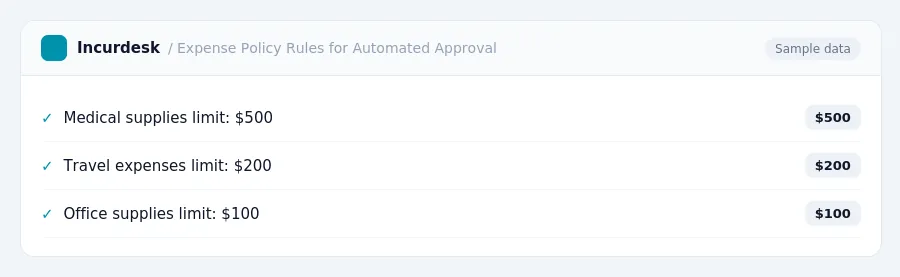
- Establish clear policies**: Update your expense policy to reflect the changes, including any new guidelines or requirements for submitting and approving expenses.
- Monitor and evaluate**: Regularly monitor the automated system's performance and gather feedback from employees, making adjustments as needed to optimize the system.
By following these best practices, you can minimize disruptions and ensure a successful transition to an automated expense approval system.
Stop losing 4+ hours a week
30-day free trial · No credit card · Setup in 15 minutes