
Why Clinic Reimbursements Take Three Weeks
A practical, data-backed guide to controlling costs and automating expense workflows.
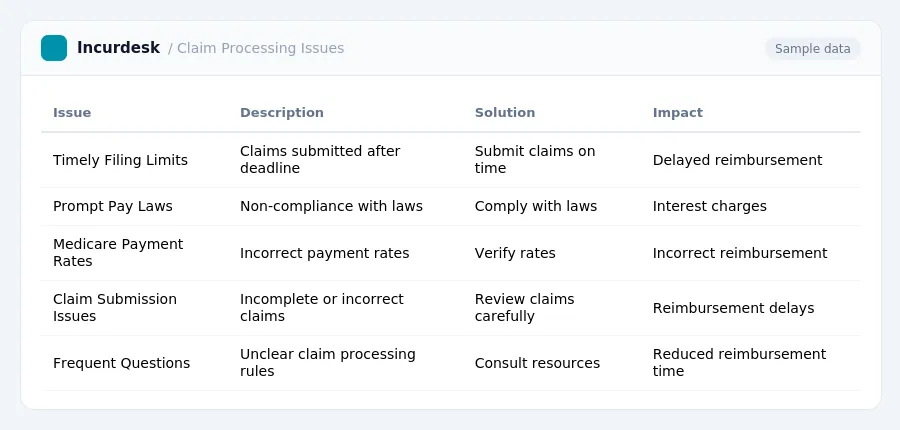
For small healthcare businesses, the three-week delay in clinic reimbursements can be frustrating and impact cash flow. Understanding the claim processing rules and common mistakes can help you better manage your healthcare expense management for under $10/user (2026) and reduce the wait time for payments. Typically, claim processing times can take up to three weeks, but this timeframe can vary depending on the payer and the specific claim requirements.
Medicare Payment Rates and Claim Processing Times
The Medicare Physician Fee Schedule (MPFS) conversion factor for 2026 is $33.57 for qualifying Advanced APM participants and $33.40 for non-participants. This conversion factor is used to calculate payments for Medicare Part B services.
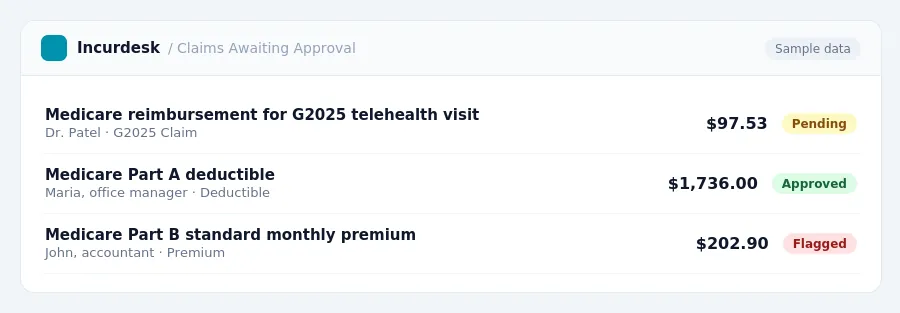
The Medicare payment rate for G2025 telehealth medical visits is $97.53. This rate applies to telehealth services provided through December 31, 2026. To bill for these services, use the G2025 code and follow the guidelines set by the Centers for Medicare and Medicaid Services (CMS).
The Medicare Part B standard monthly premium will be $202.90 in 2026. This premium is used to calculate patient out-of-pocket costs for Medicare Part B services.
The Medicare Part A inpatient hospital deductible will be $1,736 in 2026. This deductible applies to inpatient hospital services provided by Medicare Part A.
For clean claims, the claim processing time can vary.
Keeping this simple: Incurdesk lets your team snap a photo of a receipt and fills in the details for you. It is built for small healthcare teams. Try it free.
Common Mistakes and Claim Submission Issues
Common mistakes and claim submission issues can significantly delay clinic reimbursements. To minimize delays, it's essential to understand the common pitfalls that can slow down the reimbursement process.
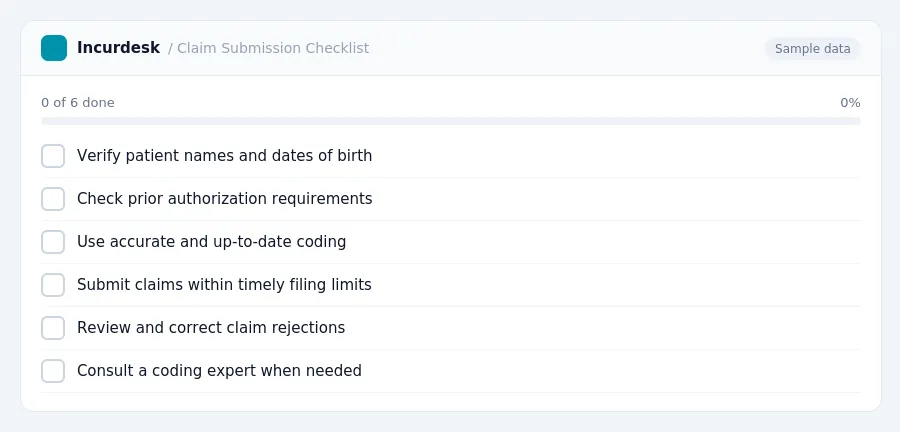
- Missing filing deadlines: Timely filing limits vary by payer, but generally, claims should be submitted within 1-2 years from the date of service. Check with each payer for their specific deadline.
- Incorrect patient information: Verify patient names, dates of birth, and insurance information to avoid claim rejections.
- Prior authorization issues: Ensure you have obtained prior authorization for services that require it, and that the authorization is properly documented on the claim.
- Coding errors: Use accurate and up-to-date coding to avoid claim denials. If you're unsure about coding, consult a coding expert or resources like the Centers for Medicare and Medicaid Services (CMS) website.
- Insufficient documentation: Ensure you have all necessary documentation, such as medical records and test results, to support your claims.
- Duplicate submissions: Avoid submitting duplicate claims, as this can delay reimbursement and lead to penalties.
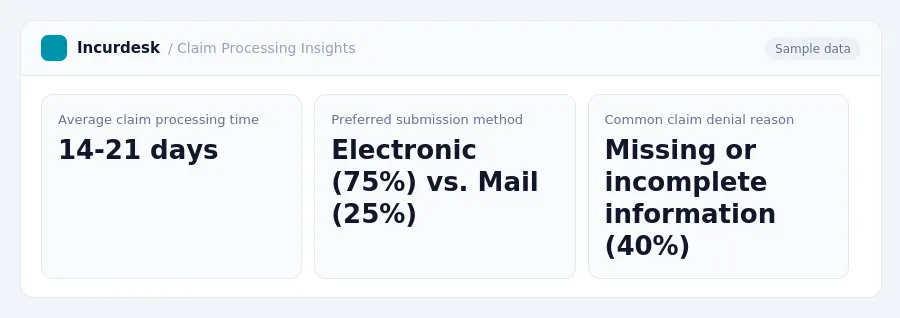
Industry standards suggest clean claims should be processed within 15 to 45 days after submission. Electronic claims may process faster, typically within 7-14 days, while paper claims can take 30-45 days. Check with each payer for their specific claim processing times.
Familiarize yourself with your state's prompt pay laws and deadlines to avoid penalties.
Understanding Timely Filing Limits for Reimbursements
When submitting claims for reimbursement, it's essential to be aware of the timely filing limits set by payers. These limits vary depending on the type of insurance and the state in which you operate. Here are some general guidelines to keep in mind:
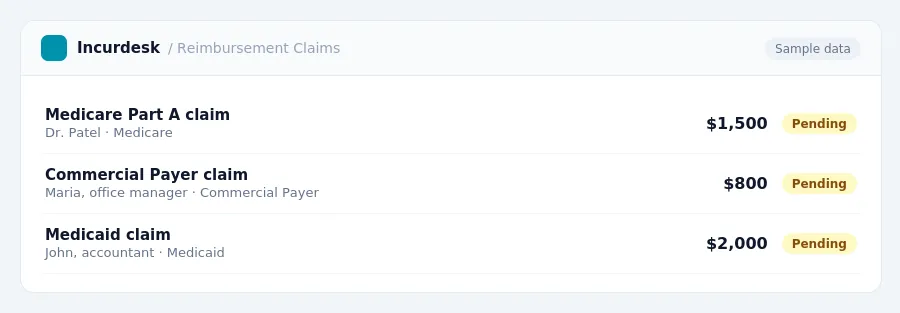
- Original Medicare has a 12-month (365-day) timely filing limit from the date of service for Part A and Part B fee-for-service claims.
- Medicare Advantage plans often have shorter timely filing limits, typically 90 or 180 days, as set by their individual contracts.
- Commercial payer timely filing limits commonly range from 90 to 180 days from the date of service, as specified in provider agreements and payer manuals.
- State Medicaid programs have varying timely filing limits, with a federal ceiling of 12 months, but many states set shorter windows (e.g., Texas: 95 days, New York and Massachusetts: 90 days).
It's crucial to review your individual contracts and payer manuals to determine the specific timely filing limits for each payer. Failing to meet these deadlines can result in delayed or denied reimbursements.
Navigating Prompt Pay Laws and Interest Rates
Understanding prompt pay laws and interest rates is crucial for small healthcare businesses to manage cash flow and minimize financial losses. Prompt pay laws require insurers to pay or deny a "clean claim" within a set timeframe. The specifics of these laws vary by state, but here's what you need to know:
- Interest accrues at the legal rate if payment is late.
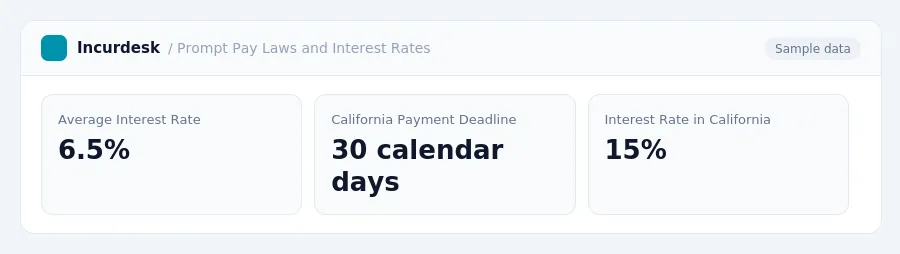
- California insurers have 30 calendar days to pay clean claims, with 15% interest applied thereafter as of January 1, 2026.
To ensure compliance, keep track of claim filing deadlines and payment due dates for each state's prompt pay laws. You can check with your state's insurance department for specific rules and regulations. If you're unsure about a particular claim, it's always best to verify the payment status with the insurer.
Remember to review your contracts with payers to understand their specific payment terms, including any interest rates that may apply to late payments. By staying informed and proactive, you can minimize financial losses and maintain a healthy cash flow for your small healthcare business.
Frequently Asked Questions about Claim Processing Variations
Insurance companies frequently update their policies, which can affect claim processing and reimbursement. To ensure you're aware of the latest rules, check with your payers regularly for changes to their policies.
Here are some frequently asked questions about claim processing variations:
- Q: Do all payers have the same claim processing times? A: No, claim processing times vary by payer and type of claim.
- Q: Can I submit claims electronically or only by mail? A: Both, but check with your payers for their preferred submission method.
- Q: How do I handle claims that are denied due to missing or incomplete information? A: Review the denial notice carefully, gather any additional information needed, and resubmit the claim.
- Q: What happens if I miss a timely filing deadline? A: Check with your payers for their specific deadlines, but generally, claims submitted after the deadline may be subject to delayed payment or denial.
- Q: What is the interest rate applied to delayed payments in California?
- Q: Can I appeal a denied claim? A: Yes, check with your payers for their appeal process and deadlines.
Stop losing 4+ hours a week
30-day free trial · No credit card · Setup in 15 minutes