
Why Grant Reports Never Match the Books
A practical, data-backed guide to controlling costs and automating expense workflows.
Grant reports often don't match the books due to various reasons, including manual data entry errors, incorrect expense categorization, and lack of standardization in expense management for non-profit organizations. As a result, nonprofits risk missing deadlines, losing funding, and damaging their reputation. To avoid these issues, it's essential to establish clear guidelines for grant reporting and ensure that financial records accurately reflect the work being done with grant funds.
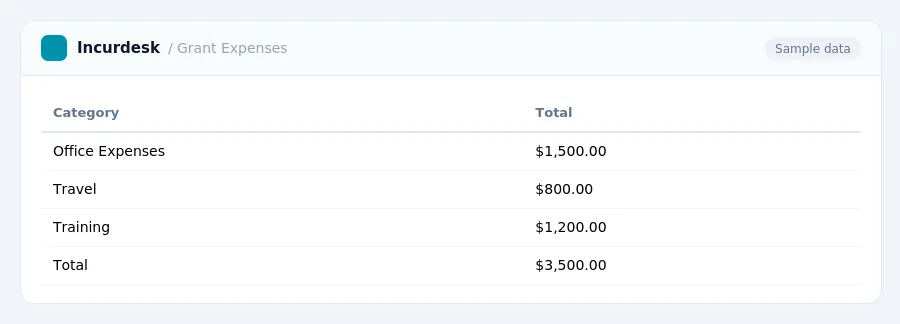
Aligning Financial Records with Grant Reports
When it comes to grant reporting, nonprofits need to ensure that their financial records accurately reflect the activities and expenses reported in their grant reports.
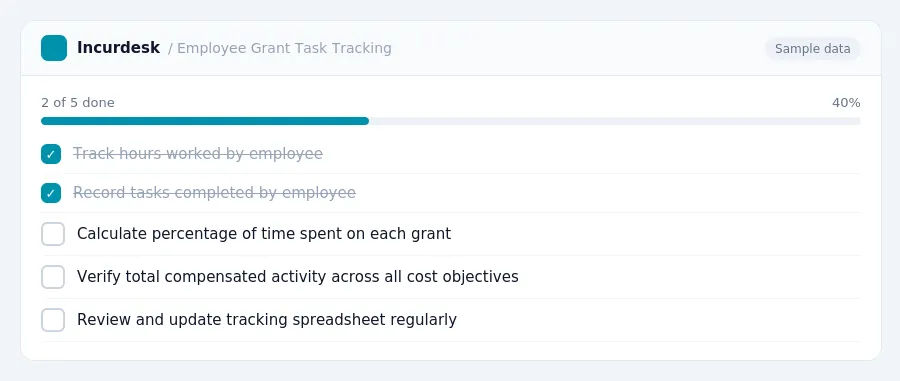
If you're paying employee salaries from federal grant funds, you'll need to track the hours worked and the tasks completed for each employee.
Create a spreadsheet or use a tracking system to record the following information for each employee:
- Grant number(s) associated with their work
- Hours worked per week or month
- Tasks completed and hours spent on each task
- Percentage of time spent on each grant (must account for 100% of an employee's total compensated activity across all cost objectives)
This will help you avoid discrepancies and ensure compliance with federal grant reporting requirements.
Keeping this simple: Incurdesk keeps receipts and approvals in one place, which makes a written policy easier to follow. It is built for small non profits teams. Try it free.
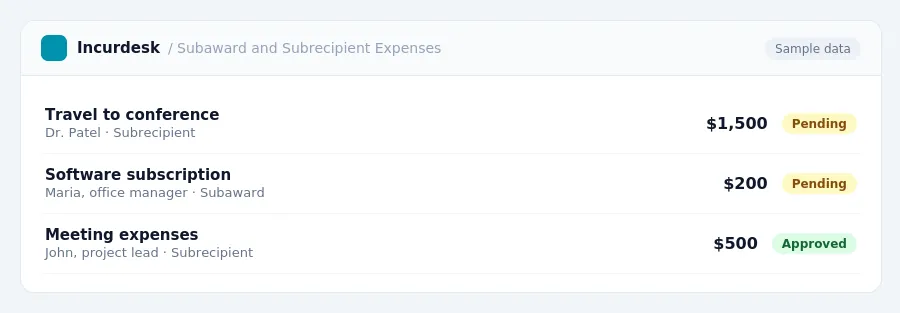
Subaward and Subrecipient Reporting
A subaward is a funding agreement between a prime awardee and a subrecipient. The prime awardee is responsible for ensuring that the subrecipient meets federal requirements.
For subaward reporting, use SAM.gov, which replaced FSRS.gov on March 8, 2025. To report, you'll need to register on SAM.gov and create a new record for the subaward.
When reporting on subrecipients, ensure that you have accurate and complete information. This includes the subrecipient's name, address, and a description of the work being performed.
State requirements for annual corporate filings also apply to subawards. Check with the state where the subrecipient is located to determine the specific requirements, such as whether annual or bi-annual reports are required.
When reporting on subawards and subrecipients, be sure to follow these guidelines to ensure compliance and avoid potential issues.
Common Pitfalls in Grant Reporting
- Incorrect Thresholds: This threshold will be adjusted for inflation starting in calendar year 2027.
- Inaccurate Record-Keeping: Ensure that financial records accurately reflect grant-related expenses.
- Lack of Attention to Detail: Double-check calculations and ensure that all necessary information is included in grant reports. Inaccurate or incomplete information can lead to delays and potential funding issues.
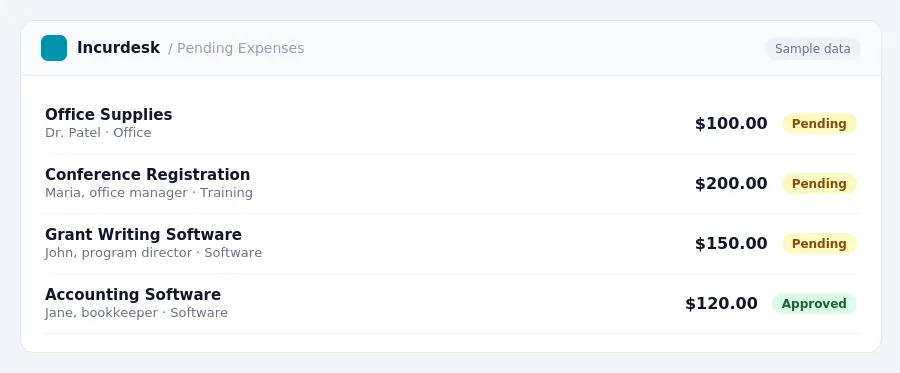
Understanding Federal Grant Reporting Requirements
When it comes to federal grant reporting, nonprofits must adhere to specific requirements to ensure compliance and avoid discrepancies. Here are some key rules to keep in mind:
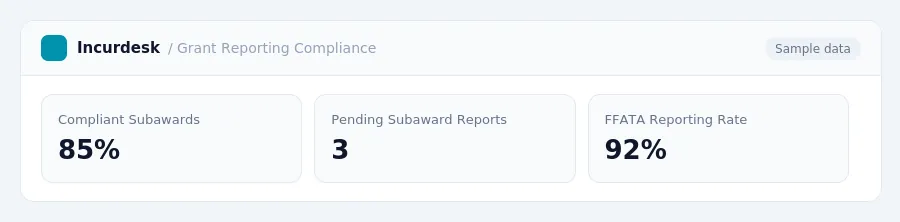
- Nonprofits acting as prime awardees that pass federal funds to sub-recipients must report these arrangements under FFATA. Any first-tier subaward equaling or exceeding $30,000 in federal funds must be reported. Reporting of modifications that bring a subaward to or above this threshold is also required.
It's essential to note that these requirements may change, and nonprofits should check the official government sources for the most up-to-date information.
Best Practices for Grant Reporting Compliance
For small nonprofits, maintaining compliance with grant reporting requirements can be challenging. However, following best practices can help ensure that your reports align with your financial records and meet federal guidelines.
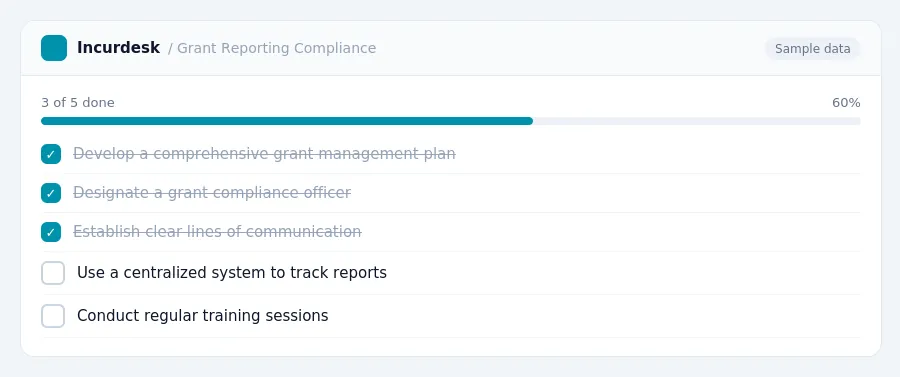
Develop a comprehensive grant management plan that outlines reporting requirements, deadlines, and responsibilities for staff members. This plan should include regular audits and reviews to ensure accuracy and completeness.
- Designate a grant compliance officer to oversee grant reporting and ensure that all requirements are met.
- Establish clear lines of communication between staff members, department heads, and grant administrators to ensure that everyone is aware of reporting requirements and deadlines.
- Use a centralized system to track grant reports, financial records, and other relevant documents.
- Conduct regular training sessions for staff members to ensure that they understand grant reporting requirements and best practices.
Regularly review and update your grant management plan to ensure that it remains effective and compliant with changing regulations and requirements.
By following these best practices, small nonprofits can ensure that their grant reports align with their financial records and meet federal guidelines, reducing the risk of discrepancies and potential funding issues.
Stop losing 4+ hours a week
30-day free trial · No credit card · Setup in 15 minutes