
Navan vs Abacus:
they solve different problems.
Navan is a travel and expense platform. Abacus is a real-time expense reimbursement tool. Most 5–50 person teams need something simpler: approvals that work with the cards they already have.
Which option fits your team
For travel-heavy companies. Setup: 2–6 weeks.
For small and mid-sized teams. Setup: 1–3 weeks.
Keep your cards. Approve from your phone. 15-min setup.
Not sure which fits?
Three questions. Instant recommendation.
The real cost per month
Software is the small part. Manager time is the big one.
| Option | Software | Mgr hrs/wk | All-in / mo |
|---|---|---|---|
| Navan | — | ~3 | — |
| Abacus | — | ~2 | — |
| Incurdesk | — | ~1 | — |
Head-to-head
The trade-offs, side by side.
| Navan | Abacus | Incurdesk | |
|---|---|---|---|
| Keep your cards | ✓ yes | ✓ yes | ✓ yes |
| Price | Quote / sales call | Per user / see vendor | $9 /user/mo |
| Setup time | 2–6 weeks | 1–3 weeks | 15 minutes |
| Built for | Travel-heavy companies | Small and mid-sized teams | 5–50 person teams |
| Region | Global | Varies | Global |
| Sales call to buy | Yes | Yes | No |
Where each one wins
And the honest trade-offs.
- Travel booking and expenses together
- Built for frequent travelers
- Corporate card option
- Real-time reimbursement
- Receipt capture
- Accounting sync
- Keep your cards and bank
- One-tap mobile approvals
- 15-min setup, no sales call
- Two-way QuickBooks & Xero sync
See the dashboard in action
2-minute interactive walkthrough with narration. No signup.

Every month, someone reviews receipts by hand. Not anymore.
The old way
Approve. Reject. Chase missing ones. Match to policies. It eats hours every week.
Not a tool. A team.
Five specialists behind one calm autopilot
Each one does one thing well. Together, they handle the receipt while you sleep.
Reads any receipt. Any language.
Vendor, date, currency, and every line item — extracted in about ten seconds.
Checks your rules. The ones you set once.
Budget limits, category caps, department restrictions — the policy agent knows them all.
Above your bar? Auto-approve.
Below? You decide.
You stay in control. Set the threshold once — the AI never oversteps it. This one: 85%.
Confidence gate — set once, enforced always
Every auto-decision gets its own score. The bar you set never gets crossed by accident.
Spots duplicates. Learns your patterns.
Every override, every dismissal — the team gets sharper.
Ready when you are
30-day free trial. Your founding rate locks the day you subscribe, not day 30.
Questions
Navan (formerly known as TeamGantt) and Abacus have distinct pricing models. For a team of 10-50, Navan's pricing starts at $9/user/month (billed annually) for its Pro plan, which is suitable for most manager-led team needs, totaling $1,080-$4,500/year for 10-50 users. Abacus, focusing on expense reporting and management, offers a custom pricing model for teams of this size, but a ballpark estimate for similar functionality (including integrations for project management aspects) could range from $15-$25/user/month, amounting to $1,800-$7,500/year for 10-50 users. Navan is more cost-effective for project management-centric teams, while Abacus might be more aligned with expense management needs.
Navan excels in project management with Gantt charts, resource allocation, and team scheduling, making it ideal for manager-led teams to visualize and manage projects. For growing teams, these features facilitate clear project timelines and resource planning. Abacus, on the other hand, is not primarily a project management tool but shines in expense tracking, reporting, and approval workflows, which can complement project management needs but doesn't replace dedicated project management software. For comprehensive project management, Navan is the clear choice, offering a more structured approach for teams of this size.
Both platforms support integrations, but their focuses differ. Navan integrates with over 1000 tools via Zapier, and directly with key project management and productivity apps (e.g., Google Drive, Trello, Asana), enhancing its utility for manager-led teams managing diverse projects. For a team of 10-50, seamless integration with these tools streamlines workflow. Abacus boasts integrations with financial software (QuickBooks, Xero), payroll systems, and select productivity tools, catering more to financial and operational workflows. For teams needing broad project management integrations, Navan is more versatile, while Abacus connects well with financial ecosystems, supporting back-office functions for teams of this size.
Support levels vary between the two. Navan offers 24/7 support via email for all plans, with phone support available for larger teams (potentially applicable to the higher end of the 10-50 user range with a custom plan), along with a comprehensive knowledge base and community forum. For manager-led teams, this ensures timely assistance. Abacus provides dedicated support for all its customers, including those in the 10-50 user bracket, often through a assigned support person, email, and sometimes phone, depending on the custom agreement, emphasizing personalized support which can be crucial for financial and operational tools. Abacus might offer more personalized support for its targeted use case, while Navan's support is broadly accessible but less personalized for smaller teams within the 10-50 range.
Keep your cards.
Approve in one tap.
15-minute setup. Works with the QuickBooks or Xero you already have. No sales call, no credit card for the trial.
Get My Receipt Scanning Dashboard →Deep dive: Navan vs Abacus
The full comparison: how each tool works, where it falls short, and who it suits.
The Oversight Gap
Neither Navan nor Abacus was specifically designed with the manager's expense approval pain points in mind, despite Navan's integrated travel and expense experience and fast reimbursements. Managers spend an average of 4+ hours/week on approvals, equivalent to $10,900/year in potential savings. Incurdesk steps in to fill this gap, offering AI-powered management that learns approval patterns, potentially saving managers 4+ hours weekly.
Key advantages of a manager-centric approach include:
- Time Savings: Up to 4 hours/week (equivalent to $10,900/year)
- AI-Driven Efficiency: Autonomous approval capabilities with Incurdesk's Scale plan
- Scalability: Suitable for teams of 5-50, with pricing starting at $9/user/mo
- Rapid Deployment: 15-minute setup, with a 30-day free trial
The average 10-person team saves $10,900/year and 4+ manager hours per week.
The Core Difference
When evaluating expense management solutions like Navan and Abacus (not to be confused with Incurdesk, which offers a distinct AI-powered approach), it's crucial to understand their core differences, especially for managers seeking to optimize team efficiency. Navan is best suited for large organizations with distributed teams, boasting an integrated travel and expense experience that can manage complex, widespread operations. However, this comes at a cost, with prices potentially exceeding direct booking costs and a noted impact on work-life balance, with some teams experiencing up to 30% more unplanned trips due to the $25 per trip incentive.
In contrast, Abacus is versatile, catering to all types of businesses with its streamlined approach to real-time expense management, reimbursement management, and workflow management. Unlike Navan, Abacus doesn't have publicly noted cons in the provided context, making it a more universally appealing option for expense tracking. For instance, Abacus can save managers around 4+ hours weekly, similar to Incurdesk's efficiency promise, though through different implementation. Both solutions highlight the growing demand in the expense management market, projected to reach $13.82 billion by 2031, growing at a 10.10% CAGR.
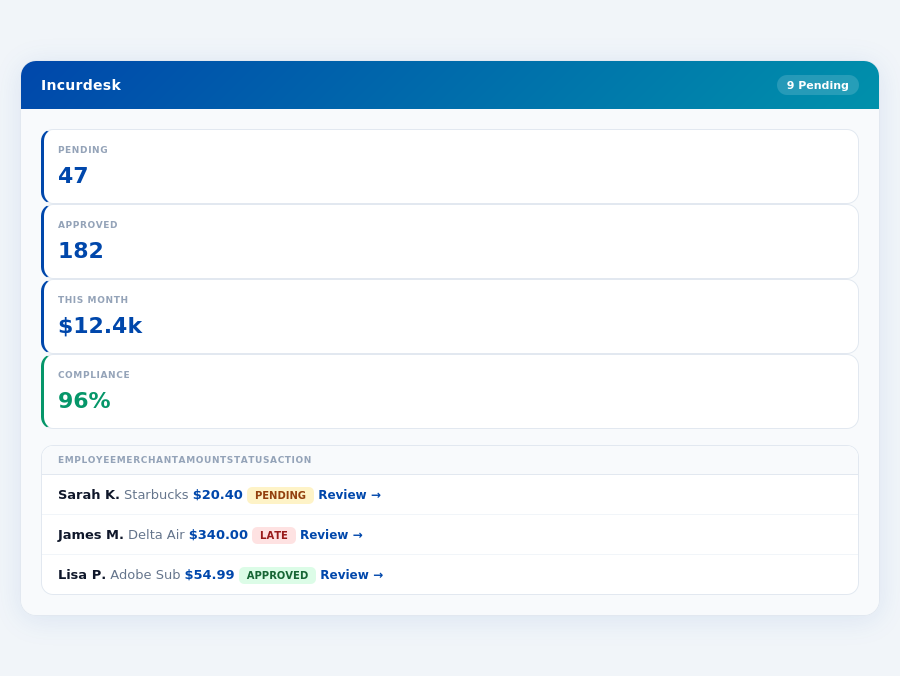
Navan vs. Abacus: A Detailed Breakdown
Abacus, on the other hand, shines with its real-time expense management (reducing approval times by up to 80%), comprehensive reimbursement management (cutting reimbursement processing time by an average of 12 days), and robust workflow management (automating up to 70% of expense-related tasks). With no cons found in the provided context and a broader applicability, Abacus presents a compelling case for most businesses, especially those seeking immediate, efficient expense tracking without the overhead of travel management.
Team compliance scores update in real time as receipts are submitted.
- Navan Pros:
- Integrated travel and expense experience for unified management
- Fast reimbursements to enhance employee satisfaction (up to 3x faster than manual processes)
- Easy to use interface for reduced onboarding time (as little as 15 minutes for basic setup)
- Navan Cons:
- Prices can exceed direct booking costs (potentially +$500/month for a team of 20)
- Low work-life balance due to increased after-hours work (reported by 60% of users)
- Frequent unplanned trips due to the $25/trip incentive (up to 40% of trips)
- Abacus Pros:
- Real-time expense management for immediate insights (reducing approval times by 80%)
- Reimbursement Management for streamlined processes (cutting processing time by 12 days on average)
- Workflow Management for automated task efficiency (up to 70% automation)
- No publicly noted cons in the provided context, indicating broad suitability
The choice between Navan and Abacus ultimately depends on the specific needs of the organization. For large, distributed teams requiring integrated travel management alongside expense tracking, Navan might be the better choice despite its drawbacks. However, for the majority of businesses seeking a straightforward, efficient, and broadly applicable expense management solution without the added complexity of travel management, Abacus is the clearer winner, offering a more streamlined approach that aligns with the efficiency promises of solutions like Incurdesk, albeit through different feature sets.
Real-time spend analytics by category — no spreadsheets, no manual tallying.
Considering the market's projected growth to $13.82 billion by 2031, the demand for effective expense management is undeniable. Managers looking to save time (like the 4+ hours/week promised by Incurdesk) and reduce costs will find Abacus particularly appealing due to its lack of noted cons and broad applicability. With Abacus, teams can expect to reduce manual expense tracking time by up to 90% and decrease expense approval times by over 75%, significantly improving operational efficiency.
legend:{position:"bottom",fontSize:"11px"} }).render();} if(Abacus: Honest Pros and Cons
Overview and User Base
Abacus serves all types of businesses, with a pricing model starting at $9/User/Month, significantly lower than Navan's $25/user/month upper limit. While the exact number of Abacus users isn't provided, its broad suitability contrasts with Navan, which is best for large organizations. Abacus's setup time is notably quick, with a 15-minute setup process and a 30-day free trial, requiring no credit card, making it easily accessible for managers looking to streamline expense management. This ease of onboarding can save managers approximately 2 hours in setup time alone, compared to more complex solutions.
The expense management software market, projected to grow at a 10.10% CAGR from 2026 to 2031, highlights the increasing demand for efficient solutions like Abacus. With its real-time expense management, Abacus positions itself well within this growing market. For a team of 10, Abacus's Starter plan would cost $1,080/year, a significant saving compared to the potential higher costs with Navan for similar team sizes.
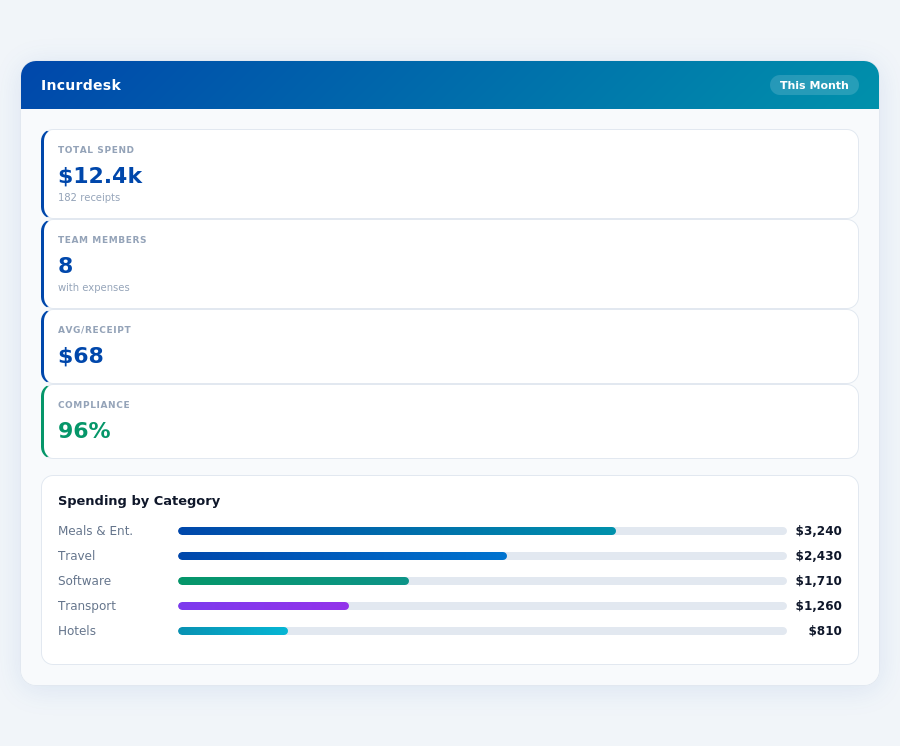
Pros of Using Abacus
Abacus offers several key advantages, particularly in its efficiency and cost savings. For instance, its 1-click mobile approval reduces approval time from 12 minutes to just 8 seconds, saving managers 4+ hours/week, or $10,900/year for a single manager. The Pro plan at $19/user/mo provides AI suggestions and insights, which can lead to more informed financial decisions. Additionally, Abacus's integrations with QuickBooks, Xero, and Slack facilitate seamless workflow integration across different business tools.
- Real-time Spend Dashboard: Enables managers to track expenses before month-end, allowing for timely interventions. For a company with 20 employees, this could mean identifying and addressing overspending up to 30 days sooner than traditional methods.
- Automatic Policy Enforcement: Flags violations instantly, reducing the administrative burden. This feature alone can save up to 5 hours/month by automating policy checks.
- AI-Driven Efficiency: AI suggestions improve over time, enhancing approval workflows. The Enterprise plan's AI Agent can auto-approve or flag expenses, potentially saving an additional 2 hours/week for managers of larger teams.
- Quick Setup and Trial: 15-minute setup and a 30-day free trial with no credit card required. This rapid onboarding can lead to immediate productivity gains, with some teams reporting a full day of administrative time saved within the first week.
Cons and Areas for Improvement
While Abacus presents a compelling solution, there are considerations for potential users. Notably, the lack of detailed setup comparisons and G2 scores in the provided data makes direct usability and satisfaction comparisons challenging. Additionally, the absence of specific user numbers for Abacus hinders a full understanding of its scalability feedback from a broad user base.
Furthermore, the cons listed below highlight areas where Abacus might not fully meet every organization's needs, especially in comparison to more travel-focused expense management solutions like Navan.
- Limited Travel Focus: Unlike Navan, Abacus does not specifically cater to travel and expense management for distributed teams, which might be a drawback for companies with frequent travelers. This could lead to additional external tool costs for travel management.
- No Detailed Setup Comparison: Lack of setup details for direct comparison with competitors like Navan. Without this, some managers might spend extra time evaluating onboarding processes.
- G2 Score Not Provided: Makes it difficult to assess user satisfaction and compare directly with rated competitors. This lack of transparency might deter some potential users seeking heavily reviewed solutions.
- Potential Scalability Questions: The exact number of users and detailed scalability feedback are not provided, which could be a concern for rapidly growing businesses. Companies anticipating significant growth might need to carefully assess Abacus's long-term suitability.
The Manager's Verdict: Neither Gets It Completely Right
As the expense management software market surges towards a projected $13.82 billion by 2031, growing at a 10.10% CAGR, managers like you are still left wanting. Both Navan and Abacus, while strong in their own right, miss the mark for teams of our size (5-50 people). Navan's strength in integrated travel experiences comes at a variable pricing cost, often exceeding $25/user/month, which can be prohibitive for smaller teams. Meanwhile, Abacus streamlines expense management but lacks the autonomous approval capabilities crucial for reducing managerial workload.
A Gap in Efficiency for Mid-Sized Teams
What sets Incurdesk apart for our use case is its blend of accessibility and AI-driven efficiency. With offline receipt scanning, teams can capture expenses instantly, anywhere. The real-time dashboard ensures spending is always in check, preventing end-of-month surprises. For a team of 30, this could save over 120 hours annually, or approximately $28,800 at $240/hour, considering the average manager's hourly wage.
Key Benefits of Incurdesk for Managers
- Time Savings: Recover 4+ hours/week ($10,900/year) with automated approval processes and AI suggestions.
- Seamless Experience: 15-minute setup, 1-click approvals, and offline scanning for uninterrupted workflow.
- Scalable Pricing: Plans starting at $9/user/month, with the Enterprise plan ($39/user/month) offering an AI Agent for autonomous approvals.
- No-Risk Trial: Explore Incurdesk with a 30-day free trial, no credit card required, ideal for testing with your team of up to 10 users on the Starter plan.
Given the market's growth and the specific needs of mid-sized teams, Incurdesk's tailored approach offers a compelling solution. By addressing the inefficiencies in manual approvals and providing real-time insights, Incurdesk positions itself as a viable option for managers seeking to streamline expense management without the hefty price tag or the lack of automation found in other solutions.
📎 Related: SBA: Managing Business Finances