
Tracking Restricted vs Unrestricted Spend
Real trade-offs, pricing & decision guide — updated October 2026
For small non-profit businesses with 5-50 people, tracking restricted versus unrestricted spend is crucial for accurate financial reporting, maintaining donor trust, and making informed decisions about resource allocation. Effective expense management for non-profit organizations requires a clear understanding of the difference between these two types of funds, which is essential for ensuring compliance with donor intent and legal requirements. By following best practices, non-profit owners and office managers can ensure their organizations are well-positioned to achieve their mission while maintaining operational flexibility.
Compliance with Donor Intent and Legal Requirements
Nonprofits are legally obligated to honor donor-imposed restrictions. Courts consistently rule that nonprofits must adhere to the donor's wishes, even if alternative uses might seem more effective organizationally.
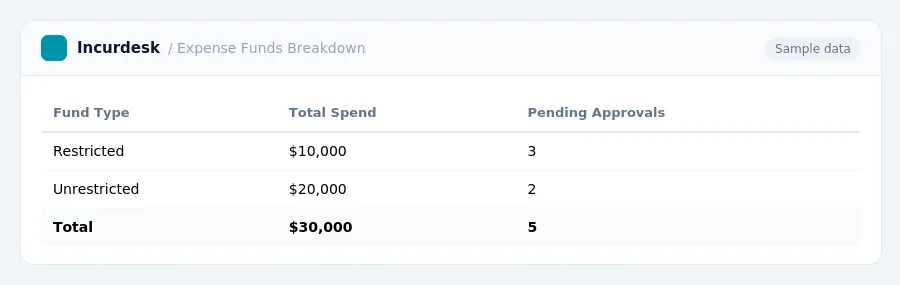
When tracking restricted and unrestricted funds, it's essential to maintain accurate records of donor-imposed restrictions. This includes documenting the purpose, amount, and duration of each restriction. For example, if a donor gifts $10,000 for a specific program, the nonprofit should create a separate account to track the funds and ensure they are used exclusively for that purpose.
Nonprofits must also ensure they are not using restricted funds for other purposes. This can be achieved by:
- Creating a separate fund or account for each restricted gift
- Clearly documenting the terms of each restriction
- Regularly reviewing and updating fund balances to ensure compliance
By following these steps, nonprofits can maintain compliance with donor intent and legal requirements, protecting their reputation and avoiding potential penalties.
Managing Restricted Funds: Purpose, Time, and Endowments
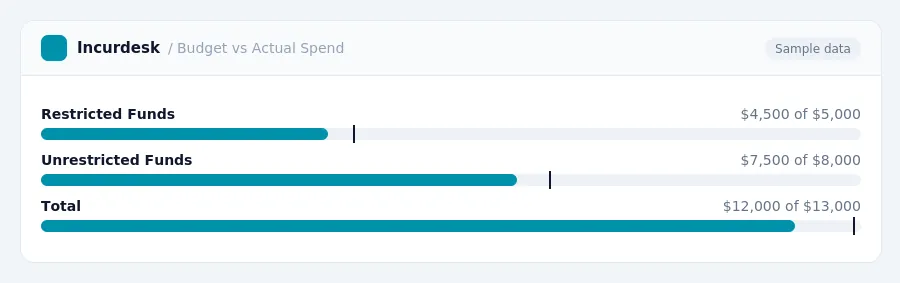
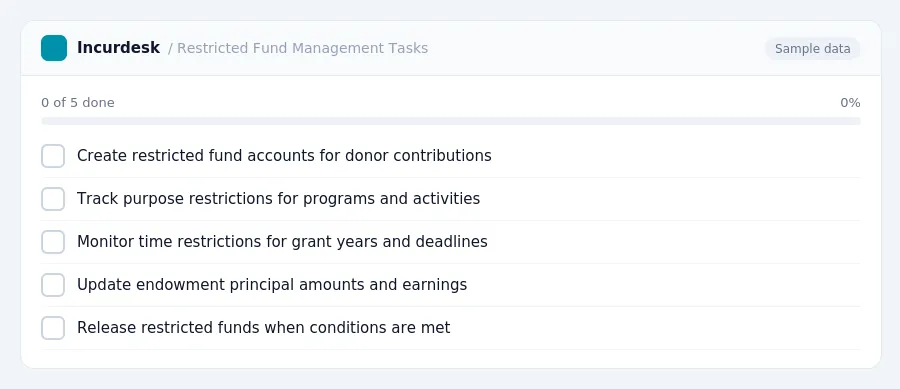
Restricted funds are contributions that donors have earmarked for a specific purpose, time period, or both. These restrictions are legally binding and must be honored by the nonprofit. When managing restricted funds, it's essential to understand the types of restrictions and how to track them.
- Purpose restrictions: These funds are designated for a specific program or activity, such as a food pantry.
- Time restrictions: These funds are available for a specific period, such as a grant year.
- Endowments: These funds have a principal amount that is invested, and only the earnings are spent.
When a restricted fund's purpose or time condition is met, it can be released from restriction. This is reported as "Net Assets Released from Restrictions" on the Statement of Activities.
For example, let's say a donor gave $10,000 to a nonprofit with a purpose restriction for a new program.
Understanding Restricted vs Unrestricted Funds
Nonprofits need to understand the difference between restricted and unrestricted funds to ensure compliance with donor intent and legal requirements. Unrestricted funds, also known as "funds without donor restrictions," can be used at the nonprofit's discretion for any mission-related need, including day-to-day operating expenses like rent, utilities, and staff salaries.
Under FASB ASU 2016-14, nonprofits classify net assets into two categories: "without donor restrictions" (formerly unrestricted) and "with donor restrictions" (which combines former temporarily and permanently restricted categories). To track these funds, nonprofits should separate restricted and unrestricted activities within their chart of accounts, often by using specific fund codes or grant codes in their accounting software.
Under FASB ASC 958-605, unconditional contributions with donor restrictions are recognized as revenue when the contribution is received, not when the funds are spent. It's essential to note that a board designating unrestricted funds for a specific purpose is not the same as a donor-imposed restriction. The board can generally change its own designations, whereas donor restrictions require donor consent or legal modification to change.
Financial experts recommend maintaining at least 40% unrestricted funding for operational flexibility. Organizations with 60% or more in unrestricted funds are better positioned to weather economic shifts and invest in strategic priorities.
Tracking Restricted and Unrestricted Funds: A Practical Approach
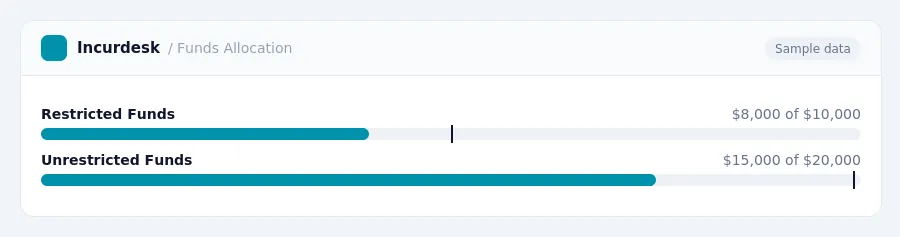
To effectively manage restricted and unrestricted funds, small nonprofits should establish a clear system for tracking and categorizing these funds. Start by creating a separate account for each restricted fund, allowing you to easily monitor and report on these funds. Ensure that all transactions related to restricted funds are accurately recorded and documented.
Develop a standardized process for allocating and expending restricted funds. This may include creating a detailed budget for each restricted fund, outlining specific expenses and timelines.
Consider implementing a system to track the source and purpose of each restricted gift. This will help you maintain accurate records and ensure that donations are used in accordance with donor intent.
Regularly review your organization's financial statements to ensure that you are maintaining a sufficient level of unrestricted funding. This will enable your organization to respond to changing circumstances and invest in strategic priorities.
By establishing a clear system for tracking and managing restricted and unrestricted funds, small nonprofits can ensure compliance with donor intent and legal requirements, while also maintaining financial flexibility and stability.
Accurate Financial Reporting and Unrestricted Funding
Accurate financial reporting is crucial for nonprofits to maintain transparency and accountability to donors, regulators, and the public. The IRS Form 990, which is publicly available, includes financial reporting information, including Form 990, Part X, which reports net assets with and without donor restrictions.
When preparing financial reports, it's essential to accurately categorize restricted and unrestricted funds. This ensures that donors and stakeholders have a clear understanding of how their contributions are being used. To do this, nonprofits should:
- Identify and track unrestricted funds separately from restricted funds.
- Report unrestricted funds as a percentage of total net assets.
- Use the data to inform strategic decisions about resource allocation.

Neither gets it right. Incurdesk does.
30-day free trial. No credit card. Setup takes 15 minutes.